
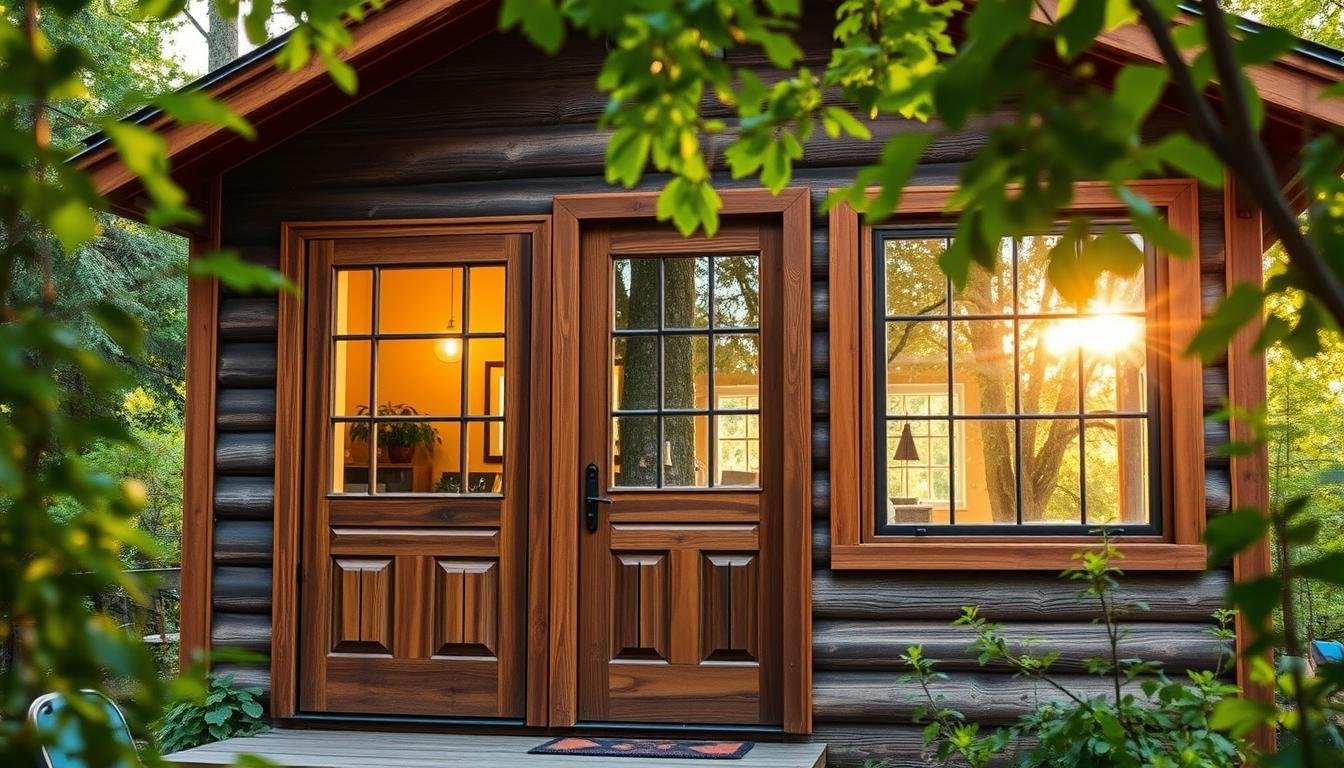
One in four tiny houses experiences visible condensation during the first winter—a clear sign that windows and doors do far more than admit light. Openings regulate daylight, vent moisture, reduce wind noise, and protect overall comfort. A well-planned design aligns glass with climate, sizes fans to manage humidity, and details installations so water always drains outward.
Smart choices boost energy efficiency: Low-E coatings, warm-edge spacers, and gas fills reduce heat transfer while keeping sills dry. Sightlines and skylight flashing shape both the design and the feel of living space. For mobile tiny houses, frames must withstand road movement, while compression seals and multi-point locks ensure doors remain solid and secure day after day.

For step-by-step install tips and product notes, see the practical guide on installing openings on a trailer home, which covers flashing, sealing, and hardware choices.
Key Takeaways
- Plan first: match glass and frames to climate before buying.
- Use Low-E, warm-edge spacers, and gas fills to cut condensation and energy loss.
- Design sightlines and skylights with proper flashing and shades for control.
- Choose frames and seals that tolerate movement for mobile living.
- Install details that shed water and allow routine maintenance.
Tiny House Windows and Doors: Plan First For Comfort, Safety, And Budget
A clear plan ties every opening to climate exposures, travel needs, and daily routines. Planning up front saves time, money, and frustration during build or retrofit.
Define needs by mapping where daylight, ventilation, and escape matter most. Confirm egress clear openings for sleeping areas and specify tempered safety glass near cooking and bathing zones.
Define Climate, Mobility, And Lifestyle Needs
Align openings to wind exposure, snow loads, and towing conditions. Choose opening types that support cross-ventilation while preserving storage and circulation.
Code, Egress, And Safety Glass Requirements
Verify egress sizes for sleeping areas and require tempered glass for any opening adjacent to stoves, tubs, or doors with lites. This reduces injury risk and meets many local codes.
Ordering, Lead Times, And Regional Service Considerations
Check regional availability and lead times, especially for cold-climate hardware that resists slush and salt. Plan for maintenance access to sills, weep holes, and lock adjustments.
Plan swing and slide clearance early to avoid conflicts with furniture and ladders; pocket or barn doors often save space near baths.
- Run swing/slide math and mark clearances on the layout.
- Specify bug screens, pet-resistant mesh, and quick-release magnets for real-world ventilation.
- Decide on shade/privacy: textured glass, frosted panes, or blinds-between-glass for road travel.
| Consideration | Why It Matters | Practical Action | Typical Timeframe |
|---|---|---|---|
| Egress Size | Safety and code compliance | Measure clear opening; order compliant units | 2–6 weeks |
| Glass Type | Tempered prevents injury near heat/water | Specify tempered for stoves, tubs, door lites | 1–4 weeks |
| Regional Hardware | Durability in local climate | Benchmark vendors and seals for winter salt | 4–12 weeks |
For practical, livable planning tips that address layout and daily use, see livable planning tips. A concise list prevents rework and keeps every opening functional in a compact living space.
Energy Efficiency In Small Spaces: Glass, Frames, And Sizing That Work
Smart glazing and slim frames can stretch daylight, cut heat loss, and keep interiors comfortable without bulky openings.
Low-E Coatings, Warm-Edge Spacers, And Gas Fills Explained
Low-E coatings reflect long-wave heat to reduce radiant loss while still passing useful visible light.
Warm-edge spacers raise corner temperature to cut condensation at the sill. Argon or krypton gas slow conduction between panes. Together they act as a system to boost winter comfort and limit summer solar heat.
Double- Vs. Triple-Pane For U.S. Climate Zones And Weight Limits
Triple-pane glazing improves U-factor in cold zones but adds weight. For a trailer build, use triple on windward walls and double elsewhere to balance comfort and towing limits.
Choose laminated layers where street-side noise control matters, and pick casements or awnings where airtight seals beat sliders for long-term efficiency.
Narrow Sightlines And Size-To-Space Strategies
Slim frames increase visible glass without enlarging the rough opening. That trick grows views and natural light while saving wall space.
Higher sills, etched glass, or textured panes keep privacy without darkening the interior.

Skylights, Clerestories, And Solar Control In Lofts And Kitchens
Place a top-hinged vented skylight for stack-effect ventilation over a galley kitchen. Use exterior shading and a blind to limit afternoon gain on west exposures.
Balancing Visible Light, Heat Gain, And Privacy
Read product data for U-factor, SHGC, spacer type, and gas fill. Match those numbers to orientation to control heat without over-darkening the room.
“Select frames that combine thermal performance with stiffness; fiberglass and aluminum-clad wood often outperform basic vinyl for road-ready builds.”
| Feature | Benefit | When To Use | Notes |
|---|---|---|---|
| Low-E + Argon | Lower radiant loss, good visible light | All climates for balanced performance | Check visible transmittance on spec sheet |
| Double-Pane | Lower weight, good value | Mild climates, secondary walls | Use warm-edge spacer for condensation control |
| Triple-Pane | Best U-factor, quieter | Cold zones, windward walls | Mix selectively to save weight |
| Slim Frame | More view, more natural light | Small rooms where wall area is limited | Prioritize gasketing and stiffness |
For practical selection and install guidance, see a detailed choosing doors and windows guide that covers flashing, seals, and hardware choices.
Ventilation And Condensation Control For Tiny Homes
Targeted ventilation prevents water buildup at the coldest openings and sills. This section gives clear specs and easy routines to stop steam and protect finishes.
Right-Size Bath Fans And Door Undercuts For Steam Removal
Size bath fans at 80–110 CFM to clear steam quickly. A 1/2-inch door undercut is essential so replacement air reaches the fan and moist air actually leaves the wet area.
Vented Range Hoods, Cross-Breezes, And Quiet Trickle Vents
Choose exterior-vented range hoods in the kitchen when possible. Use lids on pots and run the hood during cool parts of the day to lower humidity without big temperature swings.
Install trickle vents at the top of a window for low-level exchange on stormy nights. They keep fresh air moving without drafts or noise.

Cross-Flow Placement: Low Inlet, High Outlet For Fast Air Changes
True cross-flow uses one low inlet and one higher opening on the opposite side. A two-minute cross-breeze purge clears humid air fast, then fans finish the job to protect beams and corners.
Humidity Monitoring And Seasonal Routines To Keep Glass Clear
A hygrometer near the coldest window gives real-time feedback. Run fans longer after showers and cooking, open shades by day to warm glass, and close them at night to reduce radiant loss at the sill.
- Clean fan grilles and check backdraft dampers monthly.
- Keep the path-of-air undercuts free of rugs or thresholds.
- Use timed purges (two minutes) for quick exchanges; fans complete the cycle.
For detailed product and install notes, see this ventilation and opening guide.
Frames, Movement, And Water Management For Mobile And Stationary Builds
Frames form the defensive line that keeps water out while allowing a mobile shell to handle travel without damage. The approach blends material choice, sill design, and a clear sealing plan so openings stay serviceable for years.

Fiberglass, Aluminum-Clad Wood, And Reinforced Vinyl Frame Choices
Aluminum-clad wood and fiberglass handle movement well and keep quality seals. Reinforced vinyl can perform if it is flashed correctly and fastened per the maker’s map.
Sill Pans, Back Dams, And Shingle-Style Flashing Layers
Each opening must sit on a continuous sill pan with a back dam. Flashing should lap shingle-style: sides over sill, head over sides, so any incidental water egresses to the exterior, not into walls.
Hardware For The Road: Compression Seals, Multi-Point Latches, And Stays
On-road door hardware uses compression seals and multi-point latches to keep even pressure along stiles. Friction stays or limiters stop sashes from slamming in cross-winds.
Sealant Strategy: Bed Flanges, Not Face Caulk
Bedding flanges in high-quality sealant raises durability. Avoid face caulk lines that fail early; bed flanges are easier to service and preserve long-term efficiency.
Durability, Maintenance Access, And Weight-Savvy Upgrades
Plan service access to hinges, weeps, and lock adjustments so routine checks take minutes. Use heavier glazing only where it pays off and add storm panels or interior inserts for cold nights.
| Material | Stiffness | Thermal Behavior | Movement Tolerance |
|---|---|---|---|
| Fiberglass | High | Stable, low expansion | Excellent for travel |
| Aluminum-Clad Wood | Very stiff | Good insulator with clad exterior | Handles compression well |
| Reinforced Vinyl | Moderate | Variable; needs warm-edge design | Acceptable if flashed correctly |
- Install preformed or site-built sill pan with back dam.
- Seat frame, fasten per manufacturer locations.
- Shingle-style side laps, then head flashing over sides.
- Bend and bed flange in sealant; avoid face caulk.
- Fit compression seals, multi-point latches, and set stays.
For a step-by-step DIY checklist and waterproof details consult the DIY guide and the waterproofing steps for longevity.
Doors That Feel Solid: Materials, Lites, And Weather Performance
A solid entry assembly balances weight, thermal performance, and on-road durability for long-term comfort.

Fiberglass, Metal Skins, And Warm Wood Interiors
Fiberglass cores offer mass and low thermal transfer while staying light for trailers and mobile builds. Metal-skinned faces resist dents and weather. Wood interiors add a warm look that hides scuffs and accepts finish easily.
Glass Lite Options, Blinds-Between-Glass, And Privacy Control
Three-quarter lites brighten an entry without exposing the whole interior. Blinds-between-glass stay clean during travel and maintain privacy on route. Full-lite units work best with exterior shade or a storm panel to limit solar heat gain.
Thresholds, Drip Edges, Awnings, And Multi-Point Locks
Specify a low threshold shaped with a clear drip edge so carts roll easily while water sheds outside the sill. A small awning stops wind-driven rain. Multi-point locks and compression seals spread pressure, cut drafts, and keep the opening tight after miles of travel.
| Assembly | Benefit | When To Specify |
|---|---|---|
| Fiberglass Core | Good U-value, light weight | Mobile builds, cold climates |
| Metal Skin | Weather resistance, low maintenance | High-exposure exterior entries |
| Wood Interior | Warm finish, repairable | Interior-facing aesthetic, durable finish |
- Confirm reveal, latch engagement, and sweep contact at install.
- Match the entry’s finish and frame to nearby windows for balanced sightlines.
- Use tested hardware with local service support for long-term reliability.
For product selection and exterior fitting, review a detailed exterior door guide and this practical energy-efficient openings reference.
Design, Layout, And Site: Light, Noise, Accessibility, And Security
Strategic placement of openings turns tight floor plans into airy, quiet, and secure living areas.
Start by mapping desired views, privacy needs, and circulation. Use clerestories above eye level to bring sky light into lofts while keeping beds private. On street-facing sides, specify laminated panes to cut noise. For prairie or high sun sites, prioritize deep overhangs and exterior shades rather than interior film.
Window Styles, Colors, And Placement For Natural Light And Views
Match style to task: choose awnings high for wet-weather ventilation, casements for tight seals and framed views, and sliders only where clearance forces them. Black frames can modernize the exterior if trim lines stay consistent.

Clearances, Swing And Slide Math, Screens, And Security Upgrades
Run arc checks for every door and opening so an entry or ladder never conflicts with furniture. Fit screens sized for daily use and pet resistance. Specify multi-point latches for the door, keyed or pin-lockable hardware on critical sashes, and motion lighting at the exterior entry.
- Kitchen windows should align with vent hoods and keep counters clear for quick purges after cooking.
- Use higher sill heights in baths to protect privacy while allowing good light.
- Compact checklist: test swing arcs, verify day/night privacy, confirm storage remains accessible.
“Place openings to do work — admit light, block noise, provide access — without stealing essential storage.”
| Issue | Recommendation | Reason |
|---|---|---|
| Street Noise | Laminated glass on street side | Quieter sleeping areas |
| Summer West Gain | Exterior shading or overhangs | Better heat control than interior film |
| Clearance Conflicts | Arc checks; prefer pocket or outward swing | Preserves interior space |
Conclusion
A concise checklist makes openings perform reliably through seasons and travel. Plan openings first, match glazing and frames to climate and movement, and detail installs so water always has a clear exit.
Quick Checklist: Low-E, warm-edge spacers, argon/krypton fills, right-sized ventilation, and shingle-lapped flashing. Specify insulated cores, multi-point locks, and protected thresholds for a solid entry.
Verify lead times, regional service, and weight-smart glass choices. Use a hygrometer, keep sills and weeps clear, and purge humidity after cooking to protect performance.
For impact-rated options and installation notes, see an impact window guide — impact windows for small homes.
With this checklist and careful execution, a tiny home achieves energy efficiency, weather protection, and calm living, season after season.
FAQ
How should one define climate, mobility, and lifestyle needs before choosing glazing and doors?
Buyers should map daily routines, regional climate, and whether the unit will travel. Cold, humid, or coastal climates demand higher R-values, corrosion-resistant hardware, and tighter seals. Mobile builds need reinforced frames, compression seals, and lightweight glazing to meet weight limits. Living habits—like frequent cooking, pets, or a need for privacy—dictate venting, screen choices, and glass treatments.
What code, egress, and safety glass requirements apply to small dwellings in the U.S.?
Local building codes set minimum egress opening sizes, sill heights, and tempered glass where breakage risk exists. Bedrooms typically require an egress window with a clear opening that can be used for escape. Bathrooms and doors near wet areas often need safety glazing. Always verify state and municipal rules before ordering units to avoid costly replacements.
How do ordering lead times and regional service affect component selection?
Long lead times for custom sizes, coated glass, or specialty frames can delay projects. Choosing nationally supported brands or standard sizes improves access to replacement parts and service. Also factor in seasonal demand—orders placed in spring ahead of summer builds often ship faster than those started in peak season.
What do Low-E coatings, warm-edge spacers, and gas fills do for energy performance?
Low-emissivity coatings reduce infrared heat transfer while preserving visible light. Warm-edge spacers cut heat loss at the glass perimeter and reduce condensation risk. Argon or krypton fills between panes increase insulating value without much weight gain, improving comfort and lowering HVAC load.
Should one choose double- or triple-pane units for different U.S. climate zones and weight limits?
In mild climates, double-pane insulated glass units often balance performance and weight. Colder zones benefit from triple-pane units for higher R-values, but they add weight and framing stress. For mobile builds, evaluate frame capacity and trailer tongue weight before opting for heavier glazing.
How can narrow sightlines and size-to-space strategies maximize daylight without overpowering the interior?
Slim frames and minimal mullions increase glass area and daylight without enlarging openings. Use horizontal clerestories or long, narrow windows to stretch perceived space while maintaining privacy. Keep window sizing proportional to wall area to avoid heat imbalance and glare.
Are skylights and clerestories effective for lofts and kitchens, and what about solar control?
Skylights and clerestories bring valuable top-light into lofts and cooking zones. Choose venting skylights for heat release above kitchens. Add solar-control Low-E coatings or adjustable shades to limit summer heat gain while preserving light, especially on west- and south-facing exposures.
How should one balance visible light, heat gain, and privacy?
Combine glazing types: clear units where views matter, reflective or fritted glass where heat or privacy is a concern. Exterior shading, interior blinds, and glass tints help tune daylight and solar gain. Plan placement so living areas get daylight while sleeping zones keep darker, more private exposures.
What ventilation and condensation-control strategies work best for small living spaces?
Design for controlled air exchanges: right-sized bath fans, vented range hoods, and a strategy for cross-flow placement (low inlet, high outlet) remove moisture efficiently. Use trickle vents for continuous fresh air and monitor humidity with a hygrometer. Seasonal routines—like increased ventilation during showers or cooking—limit condensation on glass.
Which bath fans and door undercuts are recommended for steam removal?
Choose bath fans rated for the room size and sone level for quiet operation; install them near the shower and vent directly outside. Door undercuts of a few millimeters or transfer grilles help air move under closed doors so fans can exhaust moist air without negative pressure issues.
How do vented range hoods and cross-breezes improve indoor air quality?
Vented range hoods remove cooking moisture and pollutants directly outside, reducing load on passive ventilation. Cross-breezes, aided by operable windows and vents placed low and high, create rapid air changes that dilute indoor pollutants and speed drying after humidity events.
Where should humidity monitoring and seasonal routines fit into maintenance?
Install a hygrometer in living and sleeping zones to track relative humidity. Aim for 30–50% indoor RH. In winter, slightly lower humidity reduces condensation; in summer, use dehumidification or AC as needed. Regularly inspect seals and weep paths before wet seasons.
What frame materials suit mobile and stationary builds: fiberglass, aluminum-clad wood, or reinforced vinyl?
Fiberglass offers low thermal expansion and strong durability for both mobile and fixed homes. Aluminum-clad wood provides aesthetic warmth inside with protected exterior cladding. Reinforced vinyl gives cost-effective insulation and low maintenance. Choose based on weight limits, finish preference, and expected exposure to sun and salt.
How do sill pans, back dams, and shingle-style flashing layers prevent water intrusion?
Properly installed sill pans and back dams capture and redirect intrusion away from the structure, while layered flashing—installed shingle-style—ensures water sheds downward and out. These details are critical on mobile chassis where body movement can stress seals.
What hardware features are important for road-ready installations?
Road-ready hardware includes compression seals, multi-point latches, and stays to reduce rattles and maintain weather tightness on the move. Choose corrosion-resistant metals like stainless steel or coated finishes for longevity, especially in coastal regions.
Why use bed flanges instead of face caulk for long-term sealing?
Bed flanges and integrated flashing create a mechanically backed waterproof joint that accommodates movement. Face caulk alone ages and fails under repeated flexing; a flange strategy simplifies maintenance and extends service life.
What durability, maintenance access, and weight-savvy upgrades pay off over time?
Prioritize low-maintenance finishes, replaceable weatherstripping, and accessible fasteners for service. Consider laminated safety glass in high-impact areas and thinner-profile insulated units to cut weight while retaining thermal performance.
Which door materials deliver solid feel with good weather performance?
Fiberglass doors mimic painted wood grain with low maintenance and strong thermal performance. Metal-skin doors offer durability and impact resistance. Warm wood interiors add tactile quality but require protective exterior cladding or strict maintenance to avoid moisture issues.
What are practical glass lite options and privacy controls for doors?
Options include insulated lites, blinds-between-glass for low maintenance shading, frosted or textured glass for privacy, and low-E coatings to minimize heat transfer. Choose full- or partial-lites based on sightline and security needs.
How do thresholds, drip edges, awnings, and multi-point locks enhance entry performance?
Proper thresholds prevent drafts and water entry; drip edges and small awnings divert rain away from door faces. Multi-point locks compress the seal for better security and reduced air leakage, improving energy performance and comfort.
How do window styles, colors, and placement affect natural light and views?
Horizontal sliders and casements suit ventilation; fixed picture glass maximizes views and daylight. Light frame colors reflect more daylight into interiors; darker frames create contrast. Place openings to frame desirable vistas while avoiding direct glare on work surfaces.
What clearance, swing, and slide math should guide layout and screen choices?
Allow sufficient swing radius for hinged doors and clearance for screens and blinds. Sliding doors need headroom and overlap calculations. Plan for insect screens, storm panels, and security grilles without impeding egress or movement.
Related Articles
- Constructing Energy-Efficient Roofing: Materials and Techniques
- DIY Smart Home Integration for Energy Management
- Reclaimed and Upcycled Materials: Building a Sustainable Tiny House
- DIY Insulated Walls: How to Build for Maximum Heat Retention
- Building a Compact Bathroom: Design and Construction Tips
More from This Category
- DIY Tiny House Plumbing System: What You Need to Know
- How to Build an Outdoor Deck or Patio for Your Tiny Home
- DIY Sustainable Flooring Options for Tiny Houses
- Creating Built-In Storage Solutions During Construction: The Definitive Guide
- Installing Off-Grid Power Solutions: A DIY Guide
Additional Resources
- Building a Rainwater Collection System for Your Tiny Home
- Waterproofing Your Tiny House: Essential Steps for Longevity
- Budget-Friendly Tiny House Construction: Cost-Cutting Strategies
- Constructing Energy-Efficient Windows and Doors for Tiny Homes
- DIY Solar Panel Installation for Your Tiny House
- How to Install Insulation for Maximum Energy Efficiency
- Building a Tiny House Foundation: A Complete Guide
- Top 10 Construction Mistakes to Avoid When Building a Tiny House
- Essential Tools and Equipment for DIY Tiny House Construction
- Step-by-Step Guide to Building a Zero-Energy Tiny House