
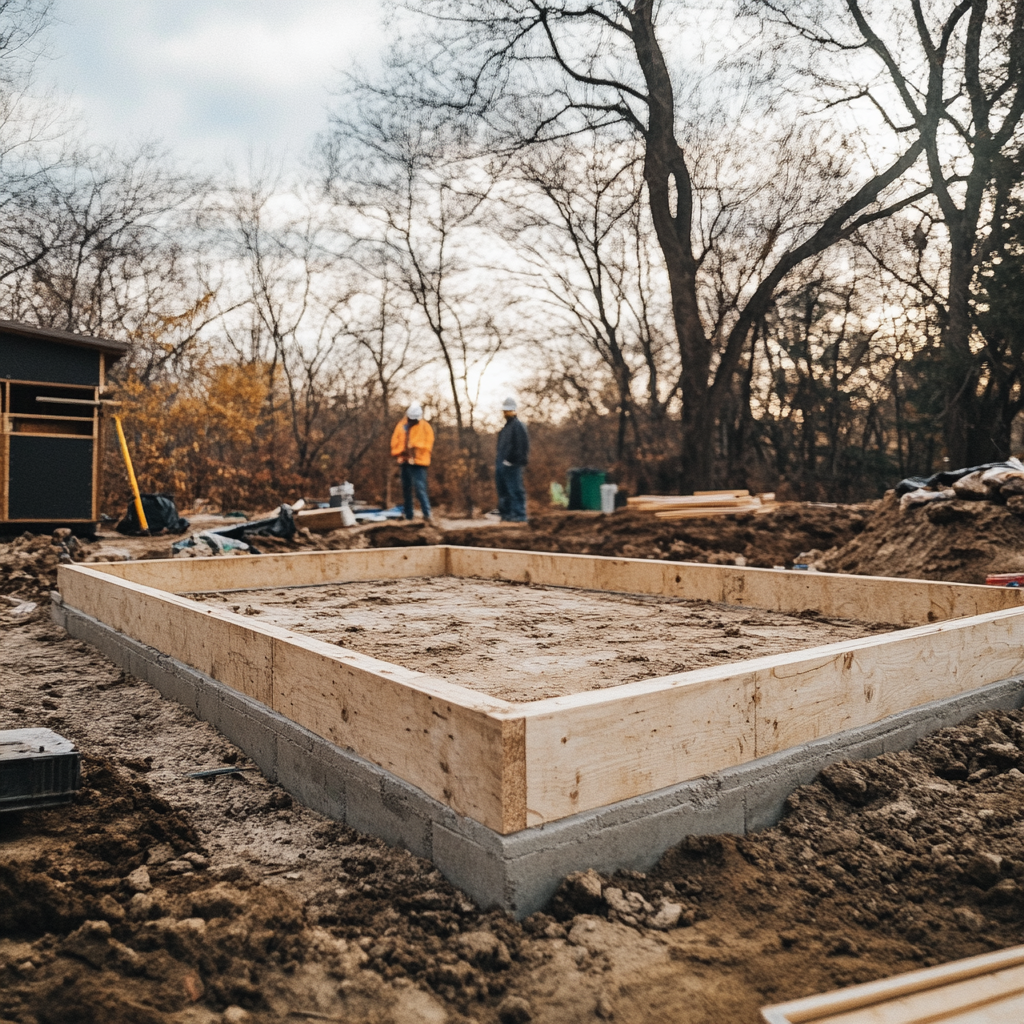
Surprising Fact: Nearly one in five small-footprint dwellings report foundation issues that add unexpected cost and delay.
This guide explains why a solid base is vital for a small home. It covers how dead loads, live loads, wind, and snow shape foundation choice. Soil bearing, compaction, and frost depth guide decisions like slab versus piers.
Readers will see practical advice on slab-on-grade for flat sites and pier or post systems for slopes and flood zones. The text also compares block walls and rubble trench options, plus mobile solutions such as trailers and skids. It notes key specs: recommended slab thickness, pad oversize, gravel pad costs, and permit needs.
For a deeper comparison and real-world ranges, consult this linked resource — best tiny house foundation guide.

Key Takeaways
- Match foundation to loads, soil, and frost depth for safety.
- Slab suits flat, compacted sites; piers work on slopes and in flood plains.
- Gravel pads cost about $5–$9 per sq ft installed; DIY ~ $2.40 per sq ft.
- Plan slab thickness (≥5 in for park models) and oversize pads by 3 ft each side.
- Check local zoning and permits before any site work.
Tiny House on Foundation: Buyer’s Overview
A fixed base changes financing, maintenance, and daily life for people considering compact living. It treats the structure and surrounding land as real property, which helps with appraisals and mortgage approvals.
Buyers compare trailer-dependent designs with permanent setups to see who benefits most. Permanent placements simplify hookups for power, water, sewer, and internet. They also cut wear from road travel and lower long-term repair needs.
Owning land reduces the risk of losing a place to park and gives owners control for future improvements. Lenders are more willing to finance a home that sits on stable bases and meets local code.
- When to choose which options: slab for flat lots, piers for slopes or flood plains, block wall for crawl spaces, rubble trench for high drainage sites.
- Practical roadmap: pick land, confirm setbacks and permits, then choose the foundation and utility plan before construction.
For examples of custom solutions and financing benefits, review insights on custom tiny homes on foundations.
Assessing Loads, Site, and Climate Before You Build
Early site evaluation pairs load calculations with soil tests and frost data to avoid surprises. A clear assessment saves money and time and helps decide the right foundation system.
Understanding Dead, Live, Wind, And Snow Loads
Dead loads are the weight of the house structure and fixed materials. Live loads include people, furniture, and movable items.
Designers add local wind and snow forces to the combined load so the foundation is not underdesigned or overbuilt. Accurate totals protect structural integrity and reduce retrofit costs.
Soil Bearing Capacity, Compaction, And Testing
Gravel and sand usually offer higher bearing capacity than silt and clay. Field compaction tests or regional maps show what the site will support.
If tests show weak soils, soil improvement or a different foundation type may be required. They’ll need a geotechnical report for high-risk sites.

Frostline Depth And Foundation Depth Requirements
Frostline is where groundwater freezes. Footings must extend below this depth to prevent frost heave.
Failure to account for frost can crack slabs, tilt piers, or stress a block wall.
Topography, Drainage, And Slope Considerations
Evaluate elevation, aspect, and contour to plan drainage. Use swales, grading, and perimeter slopes so water sheds away from the house.
Slope affects access, solar exposure, excavation time, and cost. Steep or unstable ground often favors piers over slab-on-grade.
| Factor | What To Check | Common Outcome |
|---|---|---|
| Loads | Dead + live, wind, snow | Size and depth of footings |
| Soil | Bearing capacity, compaction | Slab, pier, or soil mitigation |
| Frost Depth | Local frostline maps or test pits | Footings below freeze line |
| Topography | Slope, drainage paths | Swales, grading, erosion control |
- Quick checklist: confirm loads, get soil data, mark frost depth, and map drainage before footing work.
- Plan excavation, compaction, and temporary erosion control to protect the area during building.
Permanent Foundation Options and When to Use Them
A careful match between site conditions and structural needs steers which permanent base works best. Choosing early clarifies cost, schedule, and long‑term performance for building a compact dwelling.
Slab On Grade: Flat Sites, Lower Cost, And Insulation Details
Slab-on-grade integrates floor and foundation. It suits level, compacted sites and shallow frostlines.
Edge and under-slab insulation improve comfort and cut heating loads. Slabs reduce complexity and often lower early costs.
Post Or Pier Foundations: Sloped Terrain And Flood-Prone Areas
Post or pier systems place discrete footings and posts to span uneven ground.
Footing layout, post materials (concrete, block, treated wood), and diagonal bracing resist uplift and lateral loads. They leave the underside accessible for utilities and inspections.
Block Wall Foundations: Crawl Spaces And Basements
Block wall foundations sit on continuous footers and create crawl spaces or basements for storage and mechanicals.
They use rebar, mortar, and proper grading to keep runoff away. Subsurface spaces tap steady earth temperatures to moderate indoor swings.
Rubble Trench Foundations: Low-Impact And High-Drainage Sites
Rubble trenches use stone backfill in a trench to combine structure and drainage with minimal concrete.
They work best on high-bearing soils and flat to gentle sites. Avoid them on steep slopes or weak soils where bearing is marginal.
| Option | Best Site | Thermal/Access | Build Time |
|---|---|---|---|
| Slab-On-Grade | Flat, compacted, shallow frost | Moderate; insulation under slab improves comfort | Fast — single pour |
| Post/Pier | Sloped, flood-prone, unstable soils | Good access; underside open for utilities | Moderate — multiple footings and bracing |
| Block Wall | Flat to moderate slope needing crawl/basement | Best thermal moderation; requires vents or sump | Slower — masonry and curing time |
| Rubble Trench | High-drainage, good bearing soils | Minimal thermal mass; excellent drainage | Moderate — excavation and compacting |
Rules of thumb: use a slab for flat, compacted lots; choose piers for steep or flood-prone sites; opt for block walls when you need storage or mechanical space.
Code notes: always verify frost depth, minimum footer widths, anchor bolt spacing, and moisture detailing to protect wood framing. Connections range from embedded anchor bolts in concrete to straps and brackets on piers.
Mobile and Semi-Permanent Options: Trailers, Skids, and Piers
Mobile and semi‑permanent platforms give owners flexibility to move or set long‑term with fewer site demands. Choosing the right platform affects legal limits, transport cost, and how the structure ties into a prepared base or slab. This section compares common choices and details anchoring practices that reduce wind and travel risks.

Deckover Vs. Dovetail Trailers: Height, Width, And Cost Trade-Offs
Deckover trailers place the deck above the wheels. That gives more buildable width but raises overall height. It can increase cost and require extra clearance during moves.
Dovetail trailers keep the deck lower and reduce materials and expense. They limit interior floor area but often simplify towing and lower permit burdens.
Skids With Wheel Kits: Lightweight, Affordable Mobility
Skids with temporary wheel kits offer a lower‑cost way to move a dwelling without a full trailer. They are lighter, cheaper, and work best on flat, smooth approaches.
Moves must be staged on even ground to avoid damage. Many owners use wheel kits for short moves and then switch to leveling blocks and a gravel pad for long stays.
Anchoring And Connection: Welding, Bolting, And Tie-Downs
Connection details are critical. Welding or bolting the floor structure to the frame prevents racking during transport. Mobile home tie‑downs, hurricane straps, and anchor bolts add wind resistance.
Practical tip: use flexible utility connections with drip loops so services tolerate occasional moves. For park models, professionals recommend tie‑downs and placing leveling blocks on a slab or gravel pad for stable, long‑term support.
Cost Breakdown: Foundation Types, Materials, and Labor
Foundation pricing often decides whether a plan stays feasible or needs redesign. Early budgeting helps owners avoid surprises and choose the best structural approach.

Price Ranges: Slab, Pier, Block Wall, Rubble Trench, And Mobile
Slabs usually compete well on flat sites. They balance material and labor for a durable base.
Piers cut concrete volume and often lower material costs on slopes or flood-prone lots. Block wall work sits at the top of the price range because of masonry labor.
Rubble trench can be the most affordable when local stone and hand labor are available. Mobile setups add trailer and welding costs that should be counted early.
Gravel Pad And Concrete Slab Costs Per Square Foot
Gravel pads typically run about $5–$9 per sq ft installed. DIY estimates can fall to ~$2.40 per sq ft under ideal conditions.
A well-built concrete slab can last up to 100 years. For park models, plan a minimum 5-inch thickness and oversize the pad by at least 3 feet each side to protect the edge and simplify maintenance.
DIY Versus Professional Install: Time, Tools, And Liability
DIY saves labor but needs formwork, compaction gear, and inspection knowledge. Professionals reduce liability and ensure anchors, vapor barriers, and reinforcements meet code.
Budget for hidden costs: excavation, haul-off, drainage aggregate, insulation, anchor bolts, and permits. Add a contingency for weather or soil surprises so the project stays on track and the property gains lasting value.
Insulation, Moisture Control, and Durability Upgrades
Effective insulation and moisture detailing keep small homes comfortable and dry for decades. This section outlines practical upgrades that reduce heat loss, stop moisture, and extend the life of the home foundation and structure.
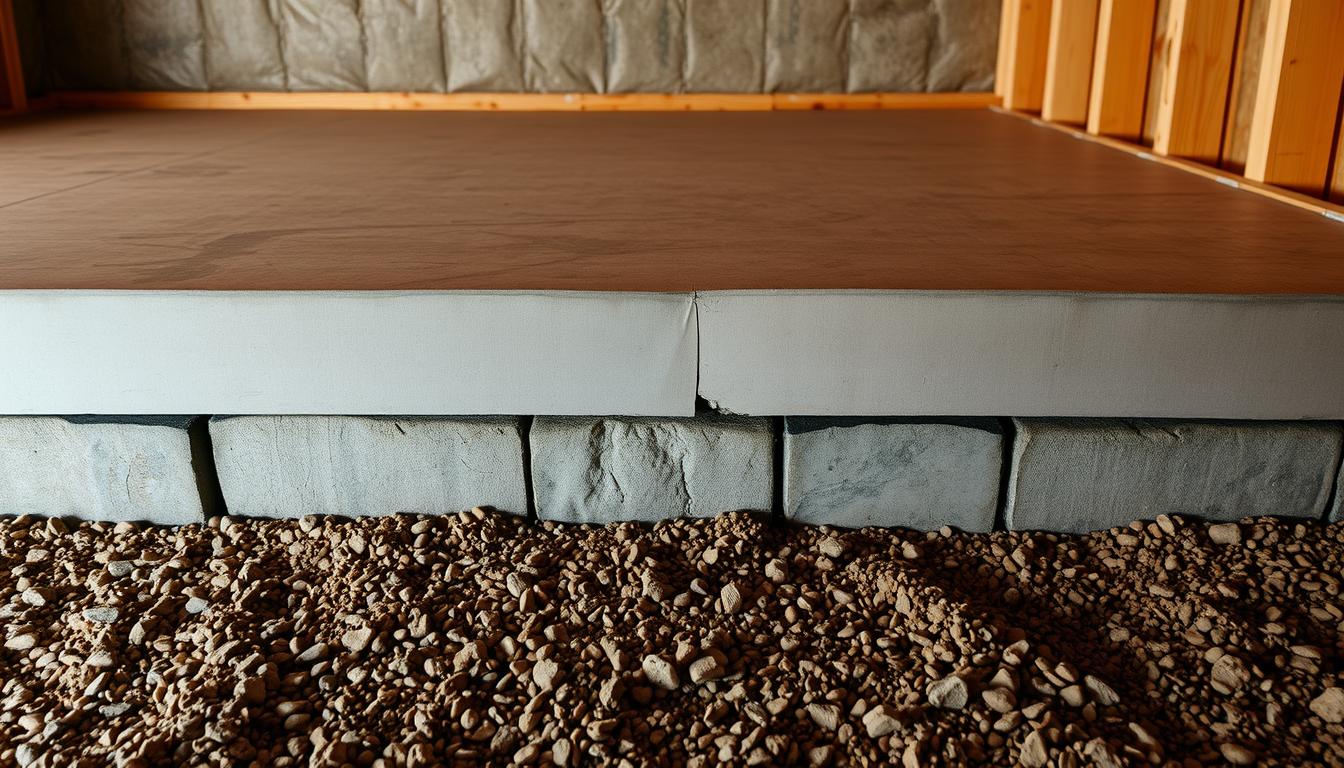
Edge And Under-Slab Insulation, Skirting, And Foam Panels
Insulating the slab edge and the area beneath the slab cuts thermal bridging and improves the comfort of the living space. Use rigid foam with adequate compressive strength under load paths to prevent crushing.
For pier or block systems, insulated skirting or rigid panels protect plumbing and reduce cold air infiltration under the house. Balance foam thickness with skirt profile so the exterior stays proportional.
Vapor Barriers, Drainage Beds, And Moisture Management
Vapor barriers over compacted gravel and properly lapped membranes form capillary breaks that stop ground moisture from wicking into assemblies. Perimeter drains and positive grading move water away from walls and footings.
Routine checks of drainage beds and skirting are essential. Air sealing crawl spaces, adding ground covers, and controlling venting stabilize humidity and protect mechanicals.
| Upgrade | Primary Benefit | Key Spec | Maintenance |
|---|---|---|---|
| Edge & Under-Slab Insulation | Reduces heat loss, warmer floors | Rigid foam, compressive strength ≥ PCF rating for loads | Inspect seals annually |
| Insulated Skirting/Foam Panels | Protects pipes, limits drafts | R-Value matched to climate; durable exterior finish | Check for gaps, pests each season |
| Vapor Barrier & Drainage Bed | Prevents moisture, mold, and decay | 6–10 mil poly, drained gravel, perimeter drain where needed | Clear drains; regrade to maintain positive slope |
For detailed installation guidance, consult the foundation insulation guidance for best practices and material choices.
Zoning, Building Codes, and Permits in the United States
Local rules shape where a small dwelling can sit, and those rules often decide the base and utilities long before construction begins.
Minimum Size, Setbacks, And Utility Permits
Zoning controls minimum lot size and setbacks from property lines. These limits directly affect where the foundation can go and how large a pad may be.
Building permits often require plans showing permeable area calculations. Running electricity, water, or sewer typically needs separate permits and inspections. Early coordination for trenching and service inspections keeps the schedule predictable.

Permanent Versus Mobile Classification And Financing Implications
Classification matters. A permanent foundation usually makes a dwelling count as real property, which helps with conventional financing and resale value.
Mobile setups face different rules and may need extra documentation. Owners should document loads, frost depth, and bearing capacity for reviewers to reduce review cycles.
- Check ADU pathways where available; they can simplify approvals.
- Ask the local office for required submittals and an approvals timeline.
- Expect varied rules across jurisdictions; confirm zoning and building codes before finalizing a plan.
| Permit | Common Trigger | Why It Matters |
|---|---|---|
| Zoning Review | Setbacks, lot use | Determines siting and pad size |
| Building Permit | Concrete slabs or structural work | Ensures code-compliant construction |
| Utility Permits | Electric, water, sewer | Coordinates inspections and service hookups |
Local verification is essential: codes evolve and interpretations differ across counties and cities.
Land, Value, and Financing: Why Foundations Appeal
Owning a parcel of land changes how a compact dwelling is financed, insured, and valued over time.
Owning Land, Property Appreciation, And Loan Access
Land ownership reduces the risk that a renter faces when a lease ends or a park sells the lot.
When a permanent house sits on owned property, it commonly appreciates with the site. That shifts a home from a depreciating asset into real property that builds equity.
Lenders are more willing to offer mortgages or construction loans for homes tied to a deeded lot than for mobile units. Insurance markets follow the same logic: standard homeowner policies become easier to secure for code‑compliant, fixed structures.
Utility Hookups: Grid Power, Water, Sewer, And Internet
Fixed sites simplify utility hookups for grid power, potable water, sewer, and internet. This reduces operating costs versus long‑term off‑grid solutions.
“A stable connection to utilities often makes daily life simpler and lowers maintenance over the long run.”
| Benefit | Why It Matters | Typical Outcome |
|---|---|---|
| Equity | Property value rises with improvements | Better resale and financing options |
| Utilities | Standard hookups; fewer workarounds | Lower operating costs |
| Insurance & Loans | Easier underwriting for permanent homes | Access to mortgages and standard policies |
Planning Your Build: Sizing, Thickness, and Site Prep Tips
A clear pad plan saves time, reduces rework, and protects the structure during construction. Early decisions about size and sequencing keep crews coordinated and inspectors satisfied.
Pad Dimensions, Thickness, and Leveling Blocks
Size the pad at least 3 feet wider and longer than the building footprint. This protects edges, spreads loads, and allows access for inspections and maintenance.
A recommended minimum slab thickness is 5 inches for heavier park models. Add reinforcement, control joints, and proper curing to extend life; well-built slabs can last up to 100 years.
Place leveling blocks at outermost corners to stabilize loads and reduce twist as soils settle. For semi‑permanent setups, integrate mobile home tie‑downs into the layout for extra safety.
- Strip organics, compact subgrade, add graded gravel, and set a vapor barrier before forming.
- Sequence utility trenches before pouring to avoid rework when building tiny house services are run.
- Lay anchor bolts to align with sill plates and beam locations at framing.
“Document slab thickness, rebar layout, and inspections to create a clean closeout packet for resale.”
| Item | Spec | Action |
|---|---|---|
| Pad Oversize | +3 ft each side | Improves access and edge protection |
| Slab | ≥5 in | Rebar, joints, cure 7–28 days |
| Elevation | Verify with laser level | Create fall away from house foundation |
Quick Checklist: confirm size and permits, mark utilities, schedule inspections, and plan delivery windows to keep trucks off soft ground.
Common Mistakes to Avoid and Safer Alternatives
Parking a small dwelling directly on bare soil is a common shortcut that often leads to costly repairs. Seasonal freeze-thaw cycles create divots and uneven support that stress frames, axles, and finishes.
No Foundation And Stacked Cinderblocks: Risks And Failures
Stacked cinderblocks without a pad can crack or punch into soft ground. That sudden shift risks structural damage, noise, and compromised safety.
Parking on bare ground is one of the most damaging things a person can do. It leads to sinking, wheel damage, and twisted frames.
- Use compacted gravel pads with geotextile to stop migration and improve bearing.
- Consider reinforced slabs or engineered pier layouts when soils vary or loads concentrate.
- Install leveling blocks at strategic points and mobile home tie-downs to reduce racking.
- Anchor with bolts, brackets, and straps sized for uplift and lateral wind loads—avoid improvised fasteners.
Inspection checkpoints include bearing under supports, crack mapping, and anchor verification. Check moisture barriers and grading: missing vapor barriers and poor drainage invite mold and corrosion.
“Underestimate wind exposure at your peril—tie-downs and anchors save homes and lives.”
When To Call A Pro: If a built foundation shows movement, wide cracks, or uneven bearing, consult an engineer to plan safe remediation.
- Do: Use engineered supports, document inspections, and follow local codes.
- Don’t: Rely on stacked blocks or bare soil for long-term support.
Conclusion
A strong base ties design, site, and code into a single plan that protects value and comfort. Choosing the right foundation transforms a compact dwelling into a durable, low‑maintenance home and helps it appreciate as real property.
Buyers should gather soil data, frostline depth, and zoning details before finalizing plans. Slab, pier, block wall, and rubble trench each match specific loads, terrain, climate, and budget needs.
Practical specs matter: oversize the pad by 3 feet each side, plan a 5‑inch slab for park models, and install anchors and leveling blocks for long‑term stability. Use vapor barriers, drained gravel beds, and insulation to keep the base dry and resilient.
Mobile paths remain viable with trailers, tie‑downs, and wheels when movement is a priority. Verify permits and inspections early, compare options, and proceed with confidence toward a tiny home built to last.
FAQ
What foundation types suit a small home built on a permanent site?
A slab-on-grade works well for flat lots and lower budgets, offering solid support and easy thermal mass. Post or pier foundations fit sloped terrain and flood-prone sites because they elevate the structure. Block wall foundations create crawl spaces or basements for storage and mechanicals. Rubble trench foundations provide a low-impact option where drainage and minimal concrete use matter.
How do site conditions and climate affect foundation choice?
Soil bearing capacity, frost depth, drainage, and slope determine foundation sizing and depth. Areas with deep frost require deeper footings or frost-protected foundations. Poorly draining sites may need raised piers or rubble trenches to avoid moisture problems. Wind and snow loads influence anchoring and structural connections.
What are typical cost ranges for different foundation systems?
Costs vary by region and finish. Concrete slab-on-grade is often mid-range per square foot. Pier or post systems can be less expensive on steep sites but increase with footing depth or helical anchors. Block wall basements are higher due to excavation and waterproofing. Rubble trench costs depend on rock availability and labor. Mobile trailer options typically cost less upfront but offer different permitting and financing outcomes.
Can a structure be built on a trailer and later put on a permanent footing?
Yes. Many owners start on a road-legal trailer for mobility, then place the unit on a permanent foundation later. The process requires proper disconnecting of trailer systems, adding adequate support to the framing, and ensuring foundation connections meet local codes. Permits and inspections will be necessary for the conversion.
What inspections and tests are recommended before pouring footings?
A geotechnical or soil-bearing test helps size footings. Compaction tests for fill material and validation of frostline depth are common. Local building departments often require footing and foundation inspections at key stages to verify dimensions, reinforcement, and drainage details.
How should insulation and moisture control be handled for a slab option?
Edge insulation and under-slab rigid foam reduce heat loss. A continuous vapor barrier beneath the slab prevents ground moisture migration. Perimeter drainage and proper grading keep water away from the slab. Skirting or insulated crawl spaces work for raised systems to control drafts and heat loss.
What zoning and permitting issues commonly affect permanent versus mobile classification?
Minimum dwelling sizes, setbacks, and utility hook-up requirements vary by jurisdiction. A structure on a permanent foundation often qualifies as real property and may access traditional mortgages and building permits; a trailer-class unit may face RV or accessory dwelling unit rules. Checking local land-use codes early avoids costly delays.
Are DIY foundation installs viable for nonprofessionals?
DIY is possible for experienced builders on simple systems like compacted gravel pads or small pier installations. Slab work, deep footings, and waterproofed basements usually require professionals for correct mixing, curing, and structural integrity. Liability, code compliance, and warranty considerations often favor hiring licensed contractors.
What are common mistakes that lead to foundation failures?
Inadequate soil testing, poor drainage, undersized footings, and using stacked cinderblocks without proper mortar or reinforcement commonly cause problems. Skipping vapor barriers or insulation and failing to anchor the structure to resist uplift and lateral loads are other frequent errors.
How do foundation choices affect financing and long-term value?
Permanent foundations typically improve resale value and qualify the property for conventional financing and home equity loans. Mobile or trailer-based options may limit loan types and appraisal values. Owning the land and meeting local building standards increases the likelihood of favorable financing and appreciation. a successful, long-lasting home.
Related Articles
- Constructing Energy-Efficient Roofing: Materials and Techniques
- DIY Smart Home Integration for Energy Management
- Reclaimed and Upcycled Materials: Building a Sustainable Tiny House
- DIY Insulated Walls: How to Build for Maximum Heat Retention
- Building a Compact Bathroom: Design and Construction Tips
More from This Category
- DIY Tiny House Plumbing System: What You Need to Know
- How to Build an Outdoor Deck or Patio for Your Tiny Home
- DIY Sustainable Flooring Options for Tiny Houses
- Creating Built-In Storage Solutions During Construction: The Definitive Guide
- Installing Off-Grid Power Solutions: A DIY Guide
Additional Resources
- Building a Rainwater Collection System for Your Tiny Home
- Waterproofing Your Tiny House: Essential Steps for Longevity
- Budget-Friendly Tiny House Construction: Cost-Cutting Strategies
- Constructing Energy-Efficient Windows and Doors for Tiny Homes
- DIY Solar Panel Installation for Your Tiny House
- How to Install Insulation for Maximum Energy Efficiency
- Building a Tiny House Foundation: A Complete Guide
- Top 10 Construction Mistakes to Avoid When Building a Tiny House
- Essential Tools and Equipment for DIY Tiny House Construction
- Step-by-Step Guide to Building a Zero-Energy Tiny House