
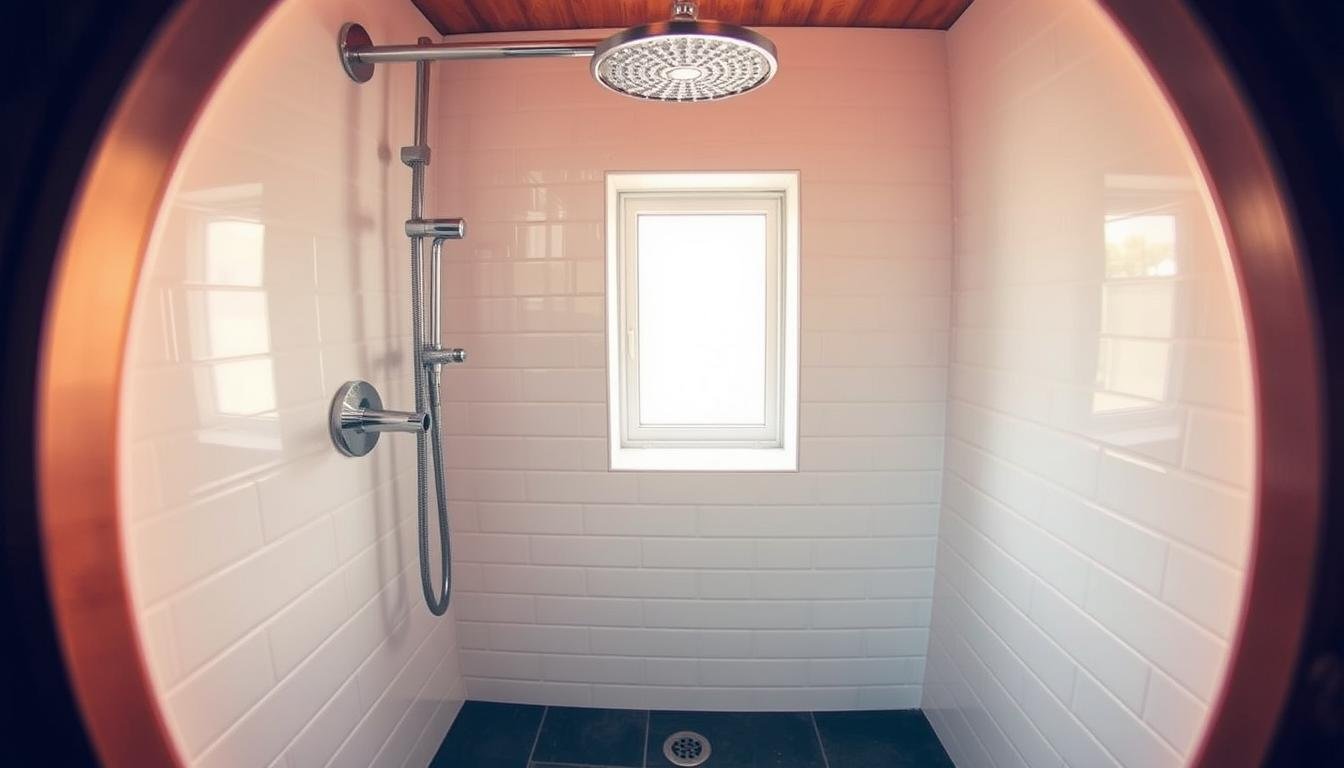
Surprising fact: a typical compact home can cut water use by up to 50% with a 40‑gallon tank and smart low‑flow fixtures, enabling long stretches off grid without sacrificing comfort.
This guide explains practical choices for a compact bathroom, from no‑plumbing setups and tank-plus-pump hybrids to direct RV hookups. It frames the tradeoffs between space, cost, and long‑term maintenance.
Readers will learn simple plumbing priorities: how water will be supplied, heated, and drained, and why ventilation is vital to prevent mold in a small envelope. The article covers fixture GPM ranges, heater pairings, and when skipping an in‑home option for a gym membership actually makes sense.
Real examples and clear design choices show what a tiny bathroom can include and where spending more up front—like pro waterproofing or a quiet pump—saves hassle later.
Key Takeaways
- Define water supply, heating, and drainage first to match your living goals.
- Choose low‑flow fixtures (1.25–1.8 GPM) and smart sprays to save water without losing comfort.
- Compare no‑plumbing, tank‑and‑pump, and RV hookup options for flexibility.
- Prioritize ventilation and waterproofing to avoid mold in tight spaces.
- Balance footprint and convenience—sometimes outside facilities reduce cost and water use.
Tiny House Shower: Start Here With Goals, Water Budget, And Constraints
Begin with a simple water budget: count people, average minutes per rinse, and planned fixture flow to estimate daily gallons needed.
Calculate Target GPM
Low-flow heads run about 1.25–1.8 GPM. Pairing one of these with a compact heater helps keep hot-water use low while preserving comfort.
Estimate demand: multiply GPM by minutes per person and by number of people. Compare that total to tank capacity—owners with 40-gallon onboard tanks often find practical autonomy between fills, but pumps can be noisy and capacity is limited.
Calculate Daily Water Use And Target GPM
Use a quick spreadsheet or notes: list shower minutes, faucet uses, and toilet flushes. Decide on a target flow that keeps showers enjoyable yet stretches each gallon.
Decide On-Grid, Off-Grid, Or Hybrid Living
Decide On-Grid, Off-Grid, Or Hybrid Living
On-grid hookups remove refill stress. Off-grid tanks plus pumps add mobility but require refill planning and may struggle in freezing weather.
Hybrid setups offer flexibility: an external fill port with an onboard tank lets occupants plug in when available and conserve water when mobile. For design tips, see bathroom design priorities and a roundup of best low-flow options.
- Factor climate: freezing temps may force hookups or carried water.
- Match heater output to chosen GPM so temperature holds during use.
- Decide whether a flush toilet stays onboard—this greatly affects total water demand.
Choose A Water Supply System That Fits Your Tiny House
A compact home’s living style hinges on whether water arrives by jug, tank, hose, or a mix of all three. Choose a supply based on travel plans, site access, and how often occupants want to top off.

No Plumbing: Gravity-Fed And Gym Tradeoffs
No-plumbing options cut cost and complexity. They require hauling jugs, parking near a municipal spigot, or using gym facilities for longer rinses.
Pros: low upfront expense and minimal plumbing work. Cons: limited daily gallons and frequent trips for refills.
Tank And Pump: Sizing, Weight, And Quiet Operation Tips
Tank-and-pump systems feel most like a standard house bathroom. A 40-gallon tank is common and can hide under cabinets to save space.
Size a tank by daily water use and desired days between fills. Check trailer or foundation weight limits before adding heavy storage.
Quiet tips: use rubber isolation mounts, short flexible lines, and place the pump away from sleeping areas to reduce vibration and noise.
Direct Hookup: RV-Style Connections For On-Grid Sites
Direct hookups accept a city-water hose and behave like an RV on-grid. Add a pressure regulator and freeze-protection for reliable service.
Sanitize hoses and ensure safe water source access when connecting to unfamiliar spigots.
Hybrid Systems: External Fill Ports, Onboard Tanks, And Flexibility
Hybrid setups pair an external inlet with onboard storage and a pump. This gives the best flexibility for stationary stays and off-grid travel.
Checklist:
- Match supply option to travel frequency and refill cadence.
- Consider tank weight and storage placement before finalizing layout.
- Plan for hose sanitation, pressure control, and freeze protection if using a direct hookup.
Plan Safe Drainage: Grey Water, Black Water, And Legal Considerations
Drain planning defines where waste and water exit the living space and sets legal guardrails for site use.

Grey Water Options: Ground Dispersal, Catchment, Or Dump Stations
Grey water from sinks and showers can sometimes be dispersed to the ground, routed to a catchment barrel, or carried to a dump station. Rules vary by state and site, so checking codes is essential.
Plants and simple reed-bed setups can filter nutrients on suitable soil, but soil type and climate determine effectiveness.
Composting Toilet Vs. Flush, RV, Incinerating, Or Chemical Toilets
A composting toilet eliminates black water and reduces weight and plumbing needs. It is popular for owners who want fewer tanks and less frequent service.
Flush toilets require a black tank, septic, or sewer hookup. RV-style units use less water but still add a holding tank. Incinerating and chemical toilets are alternatives with tradeoffs in power, odor, and emptying frequency.
Weight, Storage, And Access To Dump Stations
Black tanks increase weight and need secure storage and reliable dump station access. Route planning, turning radius at sites, and refill or dump frequency should influence the chosen way forward.
- Use biodegradable soaps and avoid phosphates to protect the ground.
- Plan winter strategies, backflow prevention, and safe hose routing.
- Match the toilet and drainage system to mobility and maintenance tolerance.
Select Your Shower Format: Insert, Wet Bath, Custom, Or Mini Tub
Choose a format that fits the floor plan, weight limits, and how much upkeep the owner wants.
Shower Inserts
Shower Inserts: Compact, Waterproof “Shower In A Box”
Factory inserts are fast and leak‑resistant. Many common models measure about 32×32 inches and drop into tight layouts with a proper door or curtain.
Reclaimed RV units can save money and are already waterproof. Inserts cut installation time and lower the chance of leaks.
Wet Baths
Wet Baths: Entire Room As Shower To Save Floor Space
Wet baths turn the whole room into the wet zone with a central drain. This saves space and simplifies layout.
They demand excellent ventilation and strict waterproofing to prevent mold and moisture damage.
Custom Builds
Custom Builds: Waterproof Materials, Tile, And Creative Finishes
Custom options use fiberglass panels, corrugated metal, molded epoxy, or tile. Tile looks premium but adds weight.
Use RedGard, movement joints, and flexible grout in mobile contexts to avoid cracks and leaks.
Soaking Options
Soaking Options: Stock Tank And Horse Trough Tubs
Stock tanks and trough tubs—galvanized steel or plastic—make quirky, compact tub options. Paint and seal metal tubs and add insulation where needed.
Pair any format with low‑flow fixtures so the bathing experience feels premium while conserving water.

| Format | Typical Size | Pros | Cons |
|---|---|---|---|
| Insert | 32×32 in (common) | Fast install, waterproof, compact | Limited design, fixed size |
| Wet Bath | Varies (saves floor) | Maximizes usable space, simple layout | High humidity, needs strong ventilation |
| Custom (Tile/Epoxy) | Any | Custom look, premium finishes | Weight, cost, needs flexible grout |
| Soaking Tub (Stock/ Trough) | Small to medium | Soaking option, unique style | Splash control, sealing, adds weight |
Match the chosen format to maintenance, budget, and the overall design language of the house. Consider thresholds and water‑tight transitions, and pick a clear door or curtain to keep the space visually open.
Optimize For Low-Flow Performance Without Sacrificing Comfort
Smart spray tech and matched heating prevent cold surprises and stretch each gallon.
Target Flow Rates: Aim for 1.25–1.8 GPM for a tiny house shower and pair that with efficient sink aerators to lower total daily water use. These flows balance comfort and conservation when the rest of the supply and plumbing are sized correctly.
Pressure And Spray Tech: Water‑Saving Heads Like Nebia
Spray geometry, droplet size, and nozzle design affect perceived pressure more than raw GPM. Nebia-style fine‑droplet heads use atomizing sprays to feel fuller while using less water.
Choose adjustable patterns to keep coverage even at lower flows. Regular descaling keeps jets performing in hard‑water areas.
Hot Water Pairing: Instant Heaters And Battery‑Powered Options
Instant and battery-powered heaters can deliver roughly 1.5 GPM—well matched to low‑flow fixtures. Size heaters by needed temperature rise, not just flow, to avoid cold‑water surprises.
Use short, insulated hot runs, thermostatic mixing valves, and anti‑scald controls to stabilize output and cut wasted waiting time.
| Component | Recommended Spec | Why It Matters | Maintenance |
|---|---|---|---|
| Showerhead | 1.25–1.8 GPM, adjustable spray | Reduces water while preserving coverage | Descale quarterly in hard water |
| Heater | Instant/battery ~1.5 GPM, sized for temp rise | Keeps temp steady at low flows | Flush per manufacturer schedule |
| Plumbing & Supply | Short insulated runs, pressure regulator | Minimizes wait, protects fixtures | Inspect fittings and valves annually |
| Controls | Thermostatic mix, anti‑scald valve | Prevents scalding, keeps comfort | Test operation twice yearly |
- Verify heater GPM matches chosen head.
- Install thermostatic mixing and short insulated lines.
- Use low‑flow aerators on sinks to extend tank days.
- Schedule descaling and heater flushing for longevity.
Design The Tiny House Bathroom Layout For Space, Weight, And Storage
Start the layout by mapping movement: entry, sink, and wet zone should flow without bottlenecks. This helps place fixtures so clearances feel larger and daily routines stay smooth.

Footprint Guidelines: 5×8 Feet, Wet Bath Drains, And Door Choices
A 5×8 foot floor is a practical benchmark; some designs compress the area smaller when necessary. Using a wet-bath drain consolidates plumbing and can reduce needed footprint.
Door choices matter: choose pocket, sliding, or an outswing to free aisle space and protect circulation in a narrow plan.
Ventilation Strategy: Fans, Air Exchangers, And Mold Prevention
Good ventilation prevents mold after each use. Install a dedicated bath fan sized for the area or a whole-house air exchanger. Run the fan for 20 minutes after bathing to clear moisture.
Smart Storage: Wall-Mounted Solutions, Niches, And Slim Cabinets
Use recessed niches, wall-mounted shelves, and slim-profile cabinets to maximize storage without crowding the space. Place a compact sink with storage below to keep essentials handy.
- Checklist: Match fixture placement to clearances, limit heavy tile to control weight, and waterproof skylights carefully.
- Balance water routing, ventilation, and storage to create a cohesive tiny house bathroom plan.
Materials And Finishes That Work In Small, Wet Spaces
Durable finishes and smart membranes keep small wet rooms dry and low-maintenance. Builders follow a moisture-first strategy that starts behind the wall and extends to every seam.

Waterproofing: RedGard, Flexible Grout, And Sealed Surfaces
Continuous membranes like RedGard are installed behind tile and at transitions to prevent leaks. Use flexible grout and movement joints to protect tile when the structure shifts.
Seal cedar ceilings and wood trim to resist moisture. Fiberglass panels offer a cost-effective, low-weight alternative for wet zones.
Light And Heat: Skylights, Glass Doors, And Thermal Considerations
Skylights and clear glass doors brighten the space and improve the look, but they need professional flashing and seals to avoid leaks. Curtains remain a lighter, private option where weight or budget matters.
Insulate behind panels, add thermal breaks, and manage condensation with a good exhaust fan. A few well-placed plants and reflective finishes make the space feel larger and spa-like.
- Maintenance: Reseal wood and glass periodically, clean grout, and inspect membranes yearly.
- Checklist: membrane + flexible grout + sealed wood + insulated backer + proper skylight flashing.
For a practical waterproofing primer and step-by-step methods, see waterproofing guidance.
Step-By-Step: How To Build A Water-Saving Tiny House Shower
Start with a clear plan. Map where supply, drainage, and vents will run before cutting framing or ordering fixtures. That early planning reduces rework, keeps weight balanced, and protects the floor and finishes.
Map Plumbing: Supply Lines, Pumps, Valves, And Shutoffs
Step 1: Draw cold and hot supply routes, pump location, shutoffs, and a pressure regulator or accumulator. Plan access panels for the pump and valves so maintenance takes minimal time.
Set The Base: Pans, Drains, And Proper Slope
Step 2: Choose a pan—32×32 is common for a compact footprint—and position the drain over the trap or outlet. Frame the base so the slope directs water to the drain and prevents standing water on the floor.
Waterproof And Finish: Panels, Tile, And Sealants
Step 3: Install cement backer, apply a continuous membrane like RedGard, and finish with panels or tile and flexible grout. Seal all seams and penetrations to protect framing and trim.
Install Ventilation, Low-Flow Fixtures, And Test For Leaks
Step 4: Fit a bath fan or air exchanger to clear humidity. Install a low‑flow head and perform static and live pressure tests at all joints before closing walls.
Budget And Timeline: Typical Costs And DIY Vs. Pro Tasks
Step 5: Pair the head with an instant or battery heater sized for ~1.5 GPM and insulate runs to cut wasted water and heat loss. For hybrid supplies, integrate a 40‑gallon tank with an external fill and an RV inlet to balance weight and refill flexibility.
Typical bathroom costs range from about $1,000 to $7,300, plus $500–$3,000 for full‑house plumbing. Expect pros for skylight flashing, complex tile, or structural framing.
- Integrate the sink, toilet, and any tub, seal penetrations, and set trim.
- Document shutoffs, pump specs, and hose inlets for future service.
- Create a short punch list: leak recheck, fan runtime, heater flow, and final caulk cure checks.
Tip: For off‑grid or hybrid specifics and an installation primer, see the off‑grid shower guide.
Conclusion
Owners succeed by aligning low‑flow fixtures, right‑sized heaters, and a supply system that fits their mobility and climate. When those pieces match, comfort and efficiency go hand in hand.
Ventilation and waterproofing are non‑negotiable. Prioritize a robust membrane, a good fan, and clear maintenance access to avoid costly moisture problems.
Choose a format that suits the plan—insert, wet bath, custom tile, or a small tub—and consider a composting toilet to cut black‑water weight and complexity. Smart storage keeps essentials organized in tight quarters.
Next steps: finalize goals, confirm site rules, map supply and drainage, then phase the build to avoid rework. For creative ideas and practical transforms, see this shower transformation guide.
FAQ
What is the best low‑flow showerhead for saving water while keeping good pressure?
Look for a 1.25–1.8 GPM model with pressure‑compensating technology and an aerator. Brands like Delta and Moen offer reliable low‑flow heads that maintain spray force. Choose one rated for at least 60 PSI if the supply provides that pressure. Pairing with a small booster pump can improve feel without increasing water use.
How does one calculate daily water use and set a realistic GPM target?
Add expected uses: showers, sink, toilet, and washing. Estimate minutes per shower and multiply by GPM. For a strict water budget, aim for showers under 3 minutes at 1.25–1.5 GPM. That keeps daily shower volume low and helps size tanks and heaters for an off‑grid or hybrid setup.
What are the tradeoffs between gravity‑fed and pump‑based supply systems?
Gravity systems are simple and quiet but require elevation for adequate pressure and larger tanks. Pump systems deliver steady pressure at low elevations and allow smaller tanks, but add electrical needs, noise, and moving‑part maintenance. For mobility and flexibility, a quiet DC pump with pressure switch is common.
Can RV‑style hookups work for long‑term on‑grid living?
Yes. Standard RV connections (city water fittings and sewer dump) offer easy hookup at many parks and long‑term sites. They require proper backflow prevention, pressure regulation, and secure fittings. Direct hookup reduces tank use and simplifies waste management when available.
What options exist for greywater disposal that meet regulations?
Accepted methods include connection to municipal sewers, using licensed dump stations, or permitted dispersal systems like subsurface drip fields where codes allow. Simple ground dispersal is often restricted. Always check local regulations before planning a greywater solution.
Is a composting toilet preferable to a flush system for limited water settings?
Composting toilets remove the need for black‑water tanks and greatly reduce water demand. They require ventilation, solids management, and occasional maintenance. Flush toilets provide convenience but need tanks, pumps, and proper disposal. Choice depends on lifestyle, code, and dump access.
How much does a wet bath save on floor space compared with a separate stall?
A wet bath can cut footprint by up to 30–40% because the entire room serves as the shower zone. It simplifies plumbing and eliminates separate shower enclosure costs. Using waterproof wall panels and a single drain reduces installation complexity.
What are realistic weight considerations for onboard water tanks?
Water weighs about 8.34 lb per gallon. A 50‑gallon tank adds over 400 lb before fittings. Account for full tank weight plus fixtures when designing the platform, axles, or foundation. Lightweight composite tanks reduce mass but cost more.
Which hot water systems work best with limited space and power?
Tankless electric or propane instant water heaters save space and provide on‑demand hot water. Small point‑of‑use electric units work where shore power is available. Propane tankless units offer efficient heating off‑grid but need proper venting and installation by a qualified technician.
How can moisture and mold be prevented in a compact wet area?
Use an exhaust fan sized for the room volume and run it during and after use. Choose mold‑resistant materials like cement backer board, waterproof membranes (for example, RedGard), and sealed grout lines. Good ventilation and regular cleaning keep mold at bay.
Are soaking options like stock tanks practical for small spaces?
Yes. Stock tank or trough tubs provide a simple soaking option with a rustic look. They require planning for fill/drain routing and support for heavy, filled weight. Shorter tubs reduce water volume and weight while still offering a soak.
How should one size a pump and accumulator for steady shower pressure?
Select a pump that meets desired GPM at the needed head (pressure). Add an accumulator or pressure tank to reduce pump cycling and smooth flow. A small DC pump with a 2–3 gallon pressure tank is common for single‑user setups.
What finishes hold up best in small wet rooms where corners and storage matter?
Waterproof wall panels, PVC trim, and tile with flexible grout perform well. Use sealed shelving and recessed niches to save space. Choose lightweight, durable materials to limit added load on the structure.
How to plan drains and slope for a compact shower or wet room?
Provide at least a 1/4″ per foot slope toward the drain and use a properly sized shower pan or linear drain. Ensure accessible cleanouts and trap placement for easy maintenance. For mobile foundations, secure flexible drain connections to allow movement.
What maintenance does a composting system require compared with standard plumbing?
Composters need regular emptying of solids, monitoring moisture and carbon balance, and vent maintenance. Standard plumbing requires tank flushing, valve checks, and occasional pump service. Both systems demand routine attention, but composting reduces liquid handling tasks.
Can water‑saving fixtures compromise comfort, and how to avoid that?
Properly selected pressure‑compensating heads and aerators preserve spray force while cutting volume. Test models in person when possible and pair with a thermostatic mixing valve or instant heater to maintain consistent temperatures for a better experience.