

One surprising fact: nearly half of U.S. counties treat small homes differently from one another, creating a patchwork of rules that can stop a project before it starts.
This guide opens with clear distinctions: construction standards set how a dwelling is made, while zoning rules control where homes can sit. Readers will learn why classification matters — on wheels units often fall under RV rules, and permanent units follow residential standards such as IRC Appendix Q for under 400 square feet.
Practical examples help show how places diverge. Fresno has approved THOWs as secondary units, some Florida counties set ADU minimums, and Colorado jurisdictions have adopted Appendix Q to ease placement. Early research with local officials is essential to build small safely and legally.
Key Takeaways
- Codes vs. Regulations: Construction standards differ from zoning rules and both affect project feasibility.
- Many areas use IRC Appendix Q to regulate homes under 400 square feet.
- On‑wheels units are often classified as RVs and face placement limits.
- Examples from California, Florida, and Colorado show how local choices vary.
- Consult local authorities early and review tiny house laws and Appendix Q adoption notes on regional pages like Appendix Q adoption.
Tiny House Building Codes By State: The Ultimate Guide Scope
Regulatory landscapes for compact dwellings shift across the country and even between neighboring towns.
This guide synthesizes statutes, zoning rules, and permit practice to show where tiny houses and tiny homes can be sited and legally occupied.
Policies vary widely: some jurisdictions embrace ADUs and Appendix Q, while others enforce minimums or limit mobile dwellings. Readers will find clear examples of friendly regions such as California, Colorado, and Oregon alongside areas with greater hurdles.
“Local enforcement and the wording of local regulations often decide outcomes more than state-level directives.”
What to expect:
- Classifications, building codes, and zoning factors that affect permitability.
- Practical thresholds such as square feet limits and Appendix Q references.
- County examples, permitting steps, and strategies to build tiny with fewer surprises.
Methodology: The guide draws on IRC and Appendix Q, county-level practice, and city precedents to make building tiny more predictable.
| Topic | What This Guide Covers | Practical Impact |
|---|---|---|
| Classification | RV, ADU, primary dwelling distinctions | Affects registration, placement, and taxes |
| Codes & Regulations | IRC, Appendix Q, local amendments | Sets safety thresholds and design limits |
| Permitting | Permits, inspections, variances | Timeline and cost implications |
| Local Practice | County and city enforcement culture | Can ease or delay approvals |
Understanding Tiny Houses And How They Are Classified
How a unit is mounted and connected often decides which rules apply and where it can sit.
Tiny Homes On Wheels Versus Permanent Foundation Homes
Mobility matters. Units on a trailer chassis are usually treated as RVs and require registration. They face limits on full‑time residency outside parks and campgrounds.
Units set on a permanent foundation are reviewed like residential structures. When placed on a lot with an existing primary home, they commonly fall under accessory dwelling units frameworks and must meet local minimums and setbacks.
When A Tiny House Is Treated As An RV, ADU, Or Primary Dwelling
Classification affects financing, insurance, and inspections. Regulators consider anchoring, utilities, and foundation work to decide if a unit is temporary or a primary dwelling.
“Local interpretation of siting and service connections often decides legal placement more than national standards.”
- RVs: registration and placement limits, park rules, and life‑safety expectations.
- Accessory dwelling: used as secondary living on a parcel with a main residence.
- Primary dwelling: may trigger full site requirements for utilities and access.
For more on how local codes and zoning interact, see understanding building codes and zoning laws.
The Legal Landscape: Building Codes Versus Zoning Regulations
Safety standards and local land‑use rules often move on different tracks, creating uncertainty for compact dwelling projects.
International Residential Code (IRC) And IBC At A Glance
The International Residential Code governs most single‑family and small multi‑unit dwellings, while the International Building Code covers larger commercial and multi‑use structures.
Appendix Q in the residential code addresses units under 400 square feet and spells out ceiling height, egress, and loft access rules for compact designs.
Why Local Zoning Districts And Counties Matter More Than States
Zoning laws determine where units may sit, how dense a parcel can be, setbacks, and occupancy limits.
Adoption of the international residential model varies by county and city. That means a county ordinance can enable or block a project regardless of statewide guidance.
Working With Your Local Building Department
Owners should check local permit procedures early. Plan submittals, electrical and plumbing schematics, and manufacturer specs smooth review.
- Cite adopted sections of the residential code and Appendix Q when applicable.
- Request plan‑check meetings to clarify interpretations and expected inspections.
- Consider variances or conditional use permits if baseline local zoning does not allow the intended use.
“Local departments interpret and enforce adoption differently; documented compliance and good relationships matter.”
| Issue | What to Review | Practical Tip |
|---|---|---|
| Code Adoption | Which versions of international residential or IBC are adopted | Bring exact code references to meetings |
| Zoning | Local zoning designations, setbacks, occupancy limits | Match project use to zone or seek a variance |
| Plan Review | Submittal checklist, inspections, special conditions | Provide manufacturer data and clear component specs |
IRC Appendix Q And The 400 Square Feet Standard
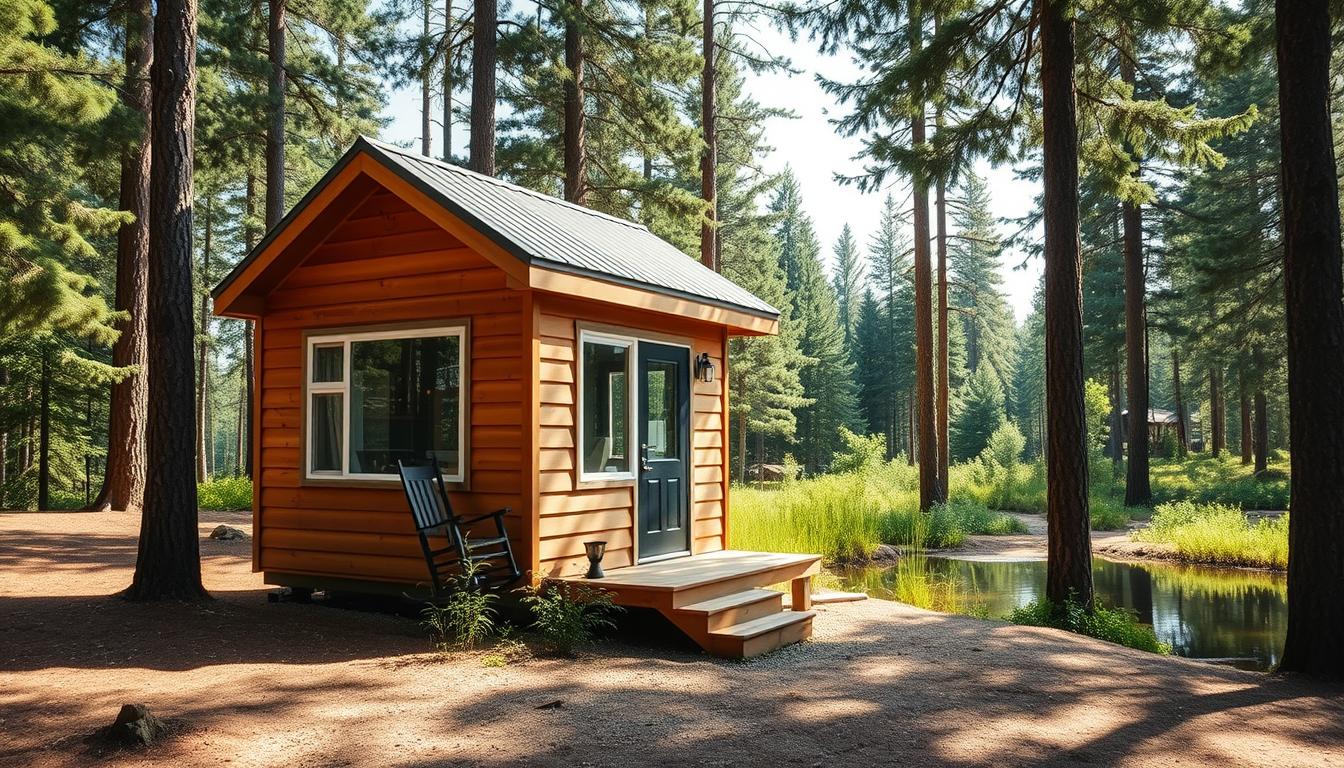
Appendix Q sets a clear threshold that reshapes design choices for compact residences. It recognizes homes 400 square feet and under and excludes lofts from that calculation. That exclusion helps designers use lofts to increase usable area without altering the threshold.
Ceiling Heights, Loft Access, Egress, And Stair/Ladder Rules
Appendix Q defines minimums that units must meet for safe occupancy. Habitable spaces require 6 feet 8 inches of ceiling height, while bathrooms must reach 6 feet 4 inches.
Loft access can use alternating tread stairs or ladders in certain situations. Guards, railings, and egress paths are specified so occupants can escape in an emergency.
“Homes built to Appendix Q meet compact-space safety benchmarks that reviewers recognize.”
How States And Counties Adopt Or Modify Appendix Q
Many jurisdictions adopt Appendix Q verbatim or with edits. Colorado, for example, largely references the 2018 international residential code with Appendix Q included.
- Common amendments adjust stair geometry, escape opening sizes, or climate-driven ventilation needs.
- Plan reviewers often accept Appendix Q references to speed approvals and inspections.
- Where Appendix Q is absent, authorities may accept equivalency requests referencing the residential code.
| Adoption Approach | What It Means | Practical Tip |
|---|---|---|
| Adopted As Written | Direct use of Appendix Q thresholds and exceptions | Reference specific sections in submittals |
| Adopted With Amendments | Local changes to stairs, egress, or ventilation | Request plan-check meetings to clarify edits |
| Not Adopted / Equivalency | Principles accepted via alternative compliance | Provide comparative code analysis and manufacturer specs |
Accessory Dwelling Units And Tiny Homes On Foundations
Many municipalities treat secondary dwellings as the practical pathway for compact, permanent living units.
Minimum Square Footage And Setback Patterns For ADUs
Accessory dwelling units often clear the zoning hurdle when local rules permit a secondary unit on a lot with a primary residence.
Minimum square footage thresholds vary. Some cities follow a 400 square feet floor; others set ranges such as St. Petersburg’s 375–750 square feet. Setbacks, height caps, and lot coverage limits shape where an accessory dwelling may sit.
Permitting expectations include a formal building permit, plan checks, and inspections to confirm life‑safety systems and utility hookups. Boulder County commonly requires a permanent foundation and confirmed water service before occupancy.
- ADUs are regulated as dwelling units, not sheds; full compliance with applicable codes is required.
- Local rules may require off‑street parking, separate entrances, or owner‑occupancy for approval.
- Site‑built and modular options exist; foundation design and drainage matter for long‑term performance.
- Utility standards—potable water, sewer or septic approval, and proper electric sizing—apply regardless of square feet.
Early engagement with neighbors and planners helps resolve setback, privacy, and service questions and speeds approval.
| Topic | Typical Rule | Practical Tip |
|---|---|---|
| Minimum Square | 375–400 square feet common; ranges up to 750 in some cities | Confirm local threshold before design |
| Foundations & Utilities | Permanent foundation often required; water and sewer hookups verified | Include foundation and utility plans in submittal |
| Permitting | Building permit, plan review, inspections | Request pre‑application meeting with plan check |
| Site Standards | Setbacks, height limits, lot coverage, parking | Check zoning and consider variances early |
Tiny House On Wheels: Registration, Parking, And Residency Limits
Owners should confirm registration and local parking permissions before placing a movable dwelling on any lot or in a park. Registration as an RV is common and triggers DMV titles, inspections, and annual fees.

When A THOW Must Be Registered As An RV
Trailer-mounted units usually require vehicle registration. Delaware, for example, needs titles within 30 days.
Florida also requires registration and limits long-term stays in RV parks unless the unit meets foundation or other conditions.
RV Parks, Campgrounds, And Limits On Full-Time Living
Local zoning and park rules shape where movable homes may park and for how long.
- Many jurisdictions ban full-time residency outside approved parks or require temporary use permits.
- Park policies vary; owners must verify duration limits, hookups, and skirting or anchoring requirements.
- Exterior appearance, utility hookups, and how waste is handled can influence enforcement and compliance.
- Insurance and financing differ for RV-classed units versus site-built homes; verify terms before purchase.
Confirm park policies and local zoning before towing to avoid fines, eviction, or registration issues.
States That Are Generally Tiny House-Friendly
Some states have set practical pathways that reduce uncertainty for compact residential projects.
California, Oregon, Washington, Maine, Texas, Colorado, North Carolina
Profiles: California drives ADU approvals and allows movable units in many jurisdictions. Oregon and Washington lean on Appendix Q and clear local ordinances. Maine’s LD 1981 creates a statewide definition that helps permit small homes.
Texas often offers flexibility in rural counties. Colorado counties such as Park County and Walsenburg have formal rules that allow compact dwelling units. North Carolina cities, including Wilmington and Asheville, are making municipal changes to allow more accessory dwelling units.
Why Policies Still Vary Widely By City And County
Local interpretation matters. Even in friendly states, many counties set unique thresholds in square feet and add special requirements.
- Adoption Tools: Appendix Q or explicit local language makes reviews predictable.
- ADU Momentum: Accessory dwelling units often offer the clearest path to approval.
- Track Changes: Watch planning agendas and public meetings for ordinance shifts.
| State | Typical Approach | Practical Note |
|---|---|---|
| California | ADU promotion, movable unit acceptance | Strong local ADU programs |
| Oregon/Washington | Appendix Q references, local ordinances | Plan reviewers often accept Appendix Q |
| Maine | State law definition and permission | Clearer approval pathways |
Where Tiny Houses Face More Roadblocks
Permit reviewers in many regions still treat compact dwellings as outliers, creating slow, uncertain approval paths.
Practical friction shows up in three ways: minimum thresholds that exclude small designs, bans on permanent residency in mobile units, and vague local language that stalls decisions.

Common Barriers: Minimum Size, Mobile Dwelling Bans, And Ambiguity
Several areas, including New York, Wisconsin, North Dakota, Alaska, and West Virginia, enforce high minimum size or refuse full-time placement of mobile units.
Lack of Appendix Q adoption or reluctance to accept compact-footprint standards raises compliance costs. Mobile units often face stricter placement limits than permanent homes, especially outside designated parks.
- Ambiguous house laws and overlapping reviews lengthen timelines.
- High minimum square footage rules block many projects with small square feet footprints.
- Regulatory uncertainty increases plan-review fees and change orders.
Mitigation: pursue foundation-based approaches, ADU pathways, or targeted variances. Schedule pre-application meetings and document life-safety compliance to counter concerns.
“Persistence and adaptability often unlock feasible legal routes.”
Monitor ordinance updates because housing pressures prompt gradual reform. With measured strategy, applicants can turn barriers into pathways.
California: ADU Momentum And Movable Tiny Dwellings
California blends progressive ADU policy with clear limits on vehicle‑class dwellings. Local innovators expanded pathways for small secondary living units while Title 25 creates baseline restrictions for RV use as permanent homes.
Fresno’s Approval Of THOWs As Secondary Units
Fresno set a notable precedent by approving trailer-mounted units as secondary dwelling units on residential lots. That approach lets owners place movable homes under accessory dwelling rules when they meet setbacks, fire, and utility conditions.
Title 25 And RV Use Limits
California Title 25 generally prohibits recreational vehicles from serving as permanent dwelling units. Cities that allow movable units structure local regulations to meet state limits while creating clear submittal checks for safety and sanitation.
Post-Disaster Flexibility And City-Level Variations
After wildfires, some jurisdictions temporarily authorized RVs and small structures to shelter displaced households under defined conditions.
- Many cities now streamline accessory dwelling permits with defined square feet bands and faster reviews.
- Local rules still vary—applicants must map municipal procedures and cite state enabling law in submittals.
- Practical tip: reference local ADU guidance and the California regulation summary at California regulation of tiny houses when filing plans.
“Documented compliance with fire, egress, and utility standards helps reviewers approve movable units as secondary dwellings.”
Colorado: Appendix Q Adoption And County Spotlights
Colorado’s adoption of the 2018 international residential code with Appendix Q and the 2015 IECC gives clear guardrails for compact design and inspections. Many counties rely on these references to streamline plan review and approvals.
Park County’s Efficiency Dwelling Requirements
Park County sets specific standards for stick‑built efficiencies: a 220 square feet living room, 100 square feet per extra occupant, a separate closet, a defined kitchen work area, and a full bathroom. Modular or manufactured units must meet a 600 square foot footprint at grade.
Walsenburg Rule Changes Supporting Small Units
Walsenburg removed minimum size limits, eased stair rules, and narrowed exit door widths to encourage compact homes. Local innovation matters when jurisdictions adapt standards to housing needs.
Denver, Jefferson, And Adams County Trends
Denver expanded ADUs as part of housing strategy. Jefferson County has no minimum size when units follow the adopted residential code. Adams County allows units between 100 and 400 square feet and enables tiny home villages with set densities.
THOWs, RVIA Standards, And Tiny Home Villages
Trailer units often must carry RVIA/ANSI insignia and follow RV standards when sited in parks. The building department and the building permit process enforce insignias, inspections, and approved installation.
“Design to Appendix Q and the IECC and coordinate early with plan reviewers to speed approvals.”
- Reference adopted residential sections in submittals.
- Confirm permit requirements with the local plan reviewer.
- Design elements must meet life‑safety and energy expectations.
| County | Notable Rule | Practical Tip |
|---|---|---|
| Park County | Efficiency room & occupancy thresholds | Include detailed floor plan in submittal |
| Walsenburg | Waived minimum size; relaxed stair rules | Seek local policy language for plan check |
| Adams County | 100–400 square feet; village framework | Confirm density and lot criteria early |
Arizona: Pima County’s Tiny House Pathways
Pima County offers a clear pathway for compact, foundation-based living that balances flexibility with safety.
Foundation Builds, Modified Requirements, And Alternative Compliance
Where detached single-family dwelling units are permitted, the county allows tiny houses on permanent foundations. That makes accessory dwelling units simpler to site on typical residential lots.
Pima treats chassis-based units with axles removed and permanently affixed as factory-built structures in designated zones. This can route a unit into the modular review track rather than an RV review.
- Relaxed minimum dimensions and acceptance of ladders to lofts speed design options.
- Reduced electrical circuits are permitted in some plan reviews to match compact needs.
- NFPA 501 is recognized as an alternative for mechanical and electrical compliance.
Practical advice: document foundation attachments, chassis removal, and NFPA 501 compliance in submittals. Clarify whether a unit is site-built, modular, or factory-built at intake to reach the correct reviewer.
“These allowances enable efficient approvals while preserving life‑safety standards.”
Design tip: integrate ventilation and energy best practices and consider accessory dwelling frameworks to streamline siting and approvals for tiny homes and houses under tight square feet footprints, including projects near the 400 square threshold.
Florida: ADU Minimums And THOW Registration
Florida blends municipal ADU benchmarks with statewide vehicle rules to create a mixed compliance picture. Owners should plan whether a unit will be fixed on a foundation or remain towable, since that choice changes permit paths and occupancy limits.

Sarasota, St. Petersburg, And Orange County Benchmarks
Florida requires trailer‑mounted units to carry DMV registration when titled as recreational vehicles. That registration affects residency rules and long‑term placement.
Sarasota County requires a THOW that stays in an RV park more than 45 days to be placed on a foundation to remain. This ensures extended‑stay units meet local utility and safety expectations.
St. Petersburg sets accessory dwelling floor areas between 375 and 750 square feet, while Orange County imposes a 400 square feet minimum for accessory dwelling units. These bands provide clear planning benchmarks for designers and applicants.
- Practical mix: foundation ADUs for long‑term occupancy and registered movable units for temporary placement.
- RV parks and tiny‑friendly hospitality sites serve as interim placement options.
- Verify HOA covenants and plan for utilities to secure long‑term habitability.
Advice: consult local planners early, document setbacks and visual compatibility, and align plans with energy and life‑safety expectations to smooth approvals.
Alaska And Hawaii: Conditional Use, Utilities, And Rural Realities
Remote geography and limited infrastructure change how planners review compact living options in Alaska and Hawaii. Anchorage and Hawaiian counties rely on conditional use and clear utility assurances to protect health and access. Accessory dwelling units and other small dwelling units face site checks and minimum amenity requirements, often tied to square feet and service connections.
Anchorage’s Conditional Use Approach And Utility Requirements
Anchorage treats trailer units as RVs and restricts them largely to R-5 zones. Foundation or manufactured homes encounter fewer location limits but usually need a conditional use permit and verified municipal water and sewer hookups.
Practical notes: frost protection, weatherization, and reliable heating/ventilation are standard expectations in cold climates and rural areas.
Hawaii Farm Dwellings And THOW Registration
Hawaii permits farm dwellings on working agricultural lots when core amenities are present. Trailer units must be registered as travel trailers and are confined to zones that allow long‑term occupancy.
- Plan for off‑grid contingencies that meet health standards.
- Discuss conditional use findings early with planning staff to frame safety and compatibility.
- Expect more agencies in review and allow extra time for approvals.
“Prepare for terrain, climate, and infrastructure limits; solid utility plans make approvals likelier.”
| Issue | Alaska | Hawaii |
|---|---|---|
| Placement | R-5 limits for trailer units | Agricultural zoning for farm dwellings |
| Services | Municipal water & sewer required | Basic amenities and registration |
| Climate Needs | Frost protection, heating | Weatherization, slope/access logistics |
Minimum Size, Square Footage, And Room Standards
Designers and applicants must meet clear dimensional thresholds that preserve safety and function in compact dwellings.
Common 400 Square Feet Thresholds And 70-120 Square Feet Room Rules
Appendix Q standardizes homes 400 square feet and under, which shapes plan limits and egress paths.
Many jurisdictions require habitable rooms of about 70–120 square feet to ensure basic usability and emergency exit space. Park County’s efficiency rules mirror these thresholds and provide a useful local example.
Ceiling Heights, Bathrooms, And Kitchen Essentials
Typical ceiling heights set living spaces at 6 feet 8 inches and bathrooms at 6 feet 4 inches to meet clearances and ventilation needs.
Bathrooms usually must include a water closet, lavatory, and shower or tub. Kitchens require a sink, a cooking appliance, and refrigeration plus approved clearances and electrical loads.
“These minimums help ensure homes built at small scales remain safe, sanitary, and functional.”

| Requirement | Common Threshold | Practical Tip |
|---|---|---|
| Overall Size | 400 square feet max (Appendix Q) | Design with lofts excluded where allowed |
| Habitable Room | 70–120 square feet | Reserve 70+ sq ft for living/bed areas |
| Ceiling Height | 6’8″ living; 6’4″ bath | Show clear heights on plans |
Advice: place stairs or ladders to lofts to protect floor area, integrate storage into circulation, and pre-check appliance clearances and electrical loads to avoid costly redesigns. Local amendments can raise minimums, so align plans with local regulations early.
Permits, Inspections, And The Path To Approval
Approval depends on paperwork, verified components, and clear inspections. Applicants should assemble a plan set that shows life‑safety, utilities, and site placement. Early contact with the local plan reviewer reduces surprises.
Building Permits, Electrical/Plumbing, And Insignias
Typical steps start with a building permit application, plan submittal, and fees. Plan review leads to staged inspections and a final approval sign‑off.
Separate trade permits for electrical and plumbing are common and often required before rough inspections. Factory-built components usually need insignias or certifications to verify compliance and installation.
Documenting Compliance With International Residential Code And Local Amendments
Provide a code analysis that cites the international residential code and any adopted residential code amendments. Show how plans must meet structural, egress, and energy provisions.
Include manufacturer specs, engineering letters, and an itemized compliance table to speed review.
Registering THOWs And Securing Long-Term Placement
Trailer units often require DMV registration and RVIA/ANSI insignia when sited in parks. Insurance, title status, and park rules affect long‑term placement.
Where long stays are planned, document hookups, anchoring, and sanitary services to meet occupancy expectations.
When And How To Seek Variances Or Conditional Use Permits
If zoning does not allow the intended use, applicants can pursue a variance or conditional use permit. Justify requests with safety data, design compatibility, and utility plans.
Pre-application meetings with the building department and planning staff help identify required findings and tailored submittals.
- Label circuits, show egress routes, and bring manufacturer data for inspection readiness.
- Confirm foundations, anchoring, and utility connections—they are scrutinized regardless of square feet.
- Align narratives with local housing goals to strengthen approval chances.
| Stage | What To Provide | Practical Tip |
|---|---|---|
| Intake | Site plan, floor plans, code analysis | Request a pre‑application meeting |
| Plan Review | Manufacturer specs, insignias, trade sheets | Cite adopted international residential references |
| Inspections | Labeled circuits, anchored foundation, verified utilities | Schedule rough and final inspections early |
How To Check Local Regulations And Build Tiny With Confidence
Before signing plans or buying land, verify the local approvals that govern small-footprint projects. Start with the parcel’s zoning designation and confirm whether the zone will allow tiny units or accessory dwellings and what square feet limits apply.
- Check local zoning and published ordinance pages for size, setbacks, and occupancy rules.
- Confirm which version of the residential code a county has adopted and whether Appendix Q or similar exceptions exist.
- Ask the building department what documents show a project will pass plan review and whether you need permit approvals for site work and utilities.
Review planning agendas and staff reports to gauge whether officials favor proposals that allow tiny solutions. Use city and county web portals for ADU standards, fee schedules, and application forms.
“Documented, written guidance from the local plan reviewer shortens review time and protects the applicant.”
Assemble a compact compliance packet and validate HOA rules in parallel. Consider pre‑design meetings and keep written records of all communications.
For inspection and certification guidance, see tiny house inspection and certification.
Conclusion
Strong, practical planning and local alignment are the keys to success with compact homes. Owners who research ordinances, cite Appendix Q and ADU paths, and document life‑safety and utility readiness find approvals move faster.
Design around proven compliance: keep plans within square feet thresholds, secure inspections, and keep records for resale or refinance. Examples in California, Colorado, Florida, and Arizona show multiple legal routes when applicants follow local rules.
Monitor policy updates and pick jurisdictions that allow tiny placements. For a quick jurisdiction check, see which states allow tiny houses. Use this guide’s steps to approach officials with clarity and confidence.
FAQ
What determines whether a tiny home on wheels is treated as an RV or a dwelling?
Classification depends on local zoning, vehicle registration rules, and whether the unit meets the International Residential Code (IRC) or RV standards. If it is built on a trailer, many counties and states require RV registration and limit full-time residency. If placed on a permanent foundation and tied into utilities, it is often treated as an accessory dwelling unit (ADU) or primary dwelling and must meet local residential code and permit requirements.
Does the International Residential Code include specific rules for small dwellings?
Yes. The IRC includes Appendix Q, which offers prescriptive standards for dwellings roughly 400 square feet or less. Appendix Q covers ceiling heights, loft access, egress, stair and ladder design, and other safety features. Jurisdictions must formally adopt Appendix Q or modify local ordinances to make it enforceable.
How do local zoning districts affect where a compact dwelling can be placed?
Zoning controls use, setbacks, and density at the city or county level. Even in states with friendly policies, municipal zoning can ban standalone small units, restrict ADUs, or impose minimum lot sizes and setbacks. Always check the zoning district designation, allowed uses, and any overlay rules with the local planning department before planning placement.
What are common minimum square footage requirements for accessory units?
Minimums vary widely. Some jurisdictions allow ADUs under 400 square feet, while others set higher thresholds or require minimum room sizes (for example, 70–120 square feet for certain primary rooms). Local amendments determine the exact minimums, so applicants should verify with the building department and zoning code.
Are permits and inspections always required for homes on foundations?
Yes. Permanently sited units must typically obtain building, electrical, plumbing, and mechanical permits and pass inspections. Plans must show compliance with the adopted residential code and any local amendments. Failure to secure permits can lead to fines, mandated changes, or removal orders.
How do states adopt or modify IRC Appendix Q?
States adopt model codes through legislative or administrative processes. Some adopt Appendix Q wholesale; others modify it or leave adoption to local jurisdictions. Counties or cities may also create alternative compliance paths or efficiency dwelling standards that mirror Appendix Q requirements.
When does a compact home on wheels need to be registered with motor vehicle authorities?
If the unit is built on a trailer frame and designed for transport, most states require title and registration as a travel trailer or RV. Registration rules affect where it can park, whether it can be used as permanent housing, and inspections for roadworthiness.
Can an ADU be built under 400 square feet and still meet code?
Many jurisdictions permit ADUs under 400 square feet if they meet adopted standards like Appendix Q or local ADU rules. The unit must still meet egress, ceiling height, sanitation, and fire-safety requirements. Always submit detailed plans so the building department can confirm compliance.
Which states are generally more supportive of small-footprint dwellings?
States with clearer ADU laws and Appendix Q adoption include California, Oregon, Washington, Maine, Texas, Colorado, and North Carolina. Even in those states, city and county policies vary, so local checks remain essential before building or placing a unit.
What common barriers should builders expect in less friendly jurisdictions?
Barriers include minimum floor-area rules, bans on mobile dwellings in residential zones, unclear classification between RV and dwelling, and lack of utility hookups in rural areas. Ambiguous code language often forces costly variances or denial of permits.
How do counties handle alternative compliance or efficiency dwelling requirements?
Some counties offer modified permit pathways, reduced inspection checklists, or alternative materials acceptance for efficiency dwellings. Others require conditional use permits or variances. Builders should engage early with the local permitting office to explore alternative compliance and documentation needs.
What must someone do to place a unit long-term in an RV park or tiny-home village?
They must follow park rules, state RV standards, and local land-use approvals. Many parks prohibit full-time residency or require units to meet RVIA or ANSI standards. Approval often requires site plans, utility hookups, and compliance with health and safety regulations.
How do disaster-relief or post-disaster policies affect movable dwellings?
After disasters, some jurisdictions temporarily relax placement rules or allow movable dwellings as emergency housing. Those allowances are typically time-limited and must still meet basic sanitation and safety standards. Long-term placement usually reverts to standard rules unless permanent policy changes occur.
What documentation is needed to prove compliance with IRC and local amendments?
Typical documentation includes stamped building plans, structural calculations, energy and mechanical plans, manufacturer specifications for trailers or RV components, and inspection reports. For modified or alternative compliance, evidence of equivalency and manufacturer testing may be required.
When should a builder seek a variance or conditional use permit?
Seek a variance when the project cannot meet numeric zoning standards (setbacks, lot coverage, or minimum size) but can demonstrate no harm to neighbors. Apply for a conditional use permit when the use is not outright allowed but may be acceptable with conditions. Early consultation with planning staff improves chances for approval.
How can someone quickly check local regulations before investing in a unit?
Start by contacting the city or county planning and building departments. Review local zoning maps, the municipal code, and any ADU or RV ordinances online. Many jurisdictions offer pre-application meetings or checklists for small dwelling projects. Consulting a local architect or land-use attorney can save time and reduce risk.