
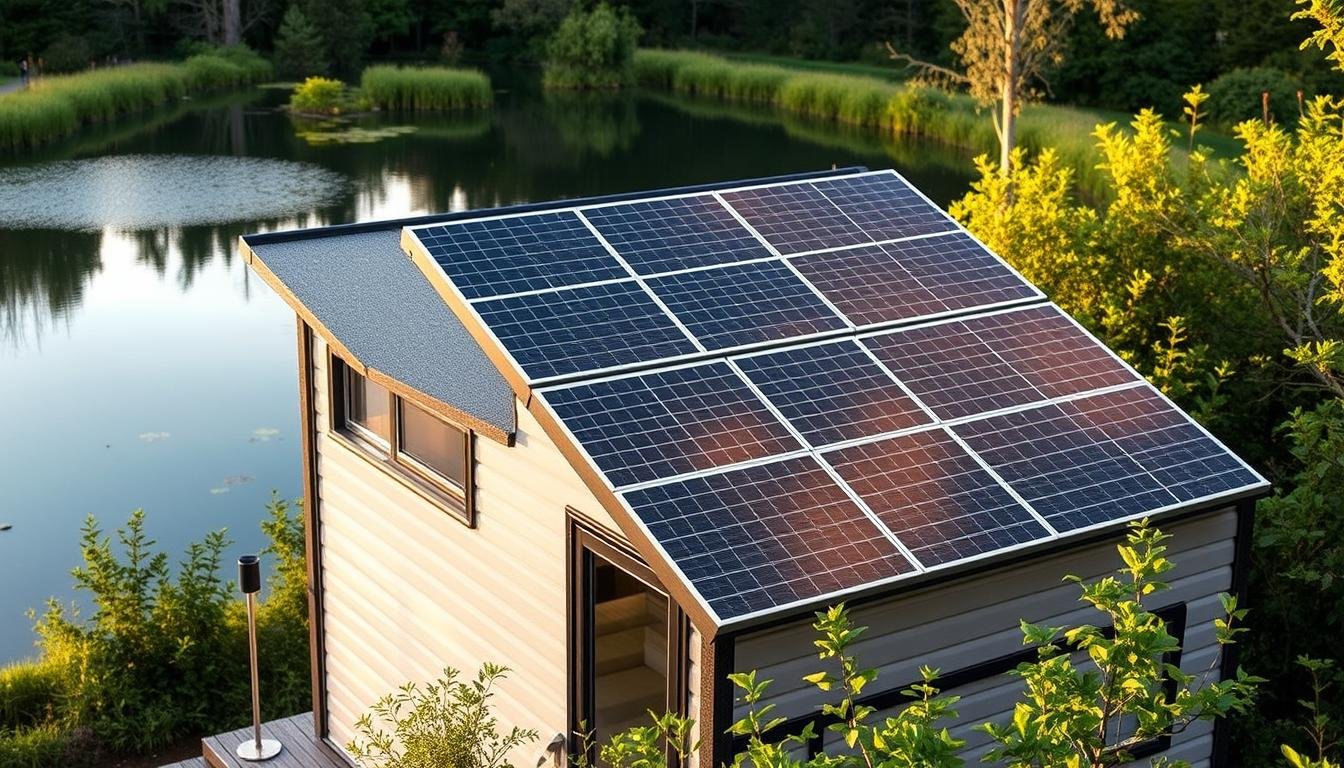
Best solar panel kits for tiny homes can cut utility bills by up to half when a house uses efficient appliances and has good sun exposure.
A compact system pairs panels, an inverter-charger, and battery storage to turn daylight into reliable power. This setup helps a tiny house stay off-grid during trips and grid outages.
Ground mounts often run cooler and are easier to maintain than rooftop installs, which can overheat in summer. All-in-one options like EcoFlow Power Kits bundle controllers, inverters, and monitoring tools for a neat, small-footprint solution.
Readers will learn how to size a system by estimating daily usage and matching that to panel output and battery capacity. For hands-on buyers, custom designs and full kits from trusted suppliers make the process simpler; compare options at a detailed guide on off-grid systems or a tiny-home kit roundup at tiny house kit picks.
Key Takeaways
- Panels plus battery convert sun into usable power for small houses.
- Ground mounts can boost efficiency and ease maintenance.
- All-in-one kits simplify wiring and monitoring for compact builds.
- System sizing depends on daily appliance use and site sun exposure.
- Rebates and seasonal deals reduce upfront cost and improve payback.
Best Solar Panel Kits for Tiny Homes: What Buyers Should Know Right Now
Knowing which devices run most often helps buyers estimate the watts and battery capacity they’ll require. Start by listing refrigeration, lighting, charging, and heating loads to translate daily usage into electricity and storage targets.
Core components include panels, an inverter-charger, and batteries. Each panel adds daily production; the inverter manages AC conversion and charging, and batteries store power for night or cloudy days.
Roofs on a compact house typically fit two or three modules. If that limits output, a ground array or portable setup often delivers much more generation without structural strain.
- Quantify energy needs by tallying watt-hours per appliance.
- Match production and storage to power consumption peaks.
- Consider mobility, shade, and local climate when choosing systems.
| Option | Typical Use | When To Choose |
|---|---|---|
| All-in-one kits (EcoFlow) | Plug-and-play home backup | Quick install, limited roof space |
| Cabin & Tiny Home Kits (SunGoldPower) | Compact off-grid living | Fixed sites with moderate loads |
| Custom packages (Unbound Solar) | Tailored systems and expansion | DIY builders or unique layouts |
Buyers should also check permits, warranty coverage, and app monitoring features. These elements reduce risk and make daily operation smoother.
Avoid common pitfalls: do not undersize batteries or ignore seasonal sun variability. On fixed plots, tying to the power grid can ease sizing, while many tiny homes prefer off-grid autonomy.
Assessing Tiny Home Energy Needs To Size Your Solar System
Start by listing each appliance’s watt rating and daily runtime to turn guesses into a usable energy budget.
Calculating Daily Watt-Hours From Appliances And Usage
Multiply device watts by hours used to get watt-hours (Wh). For example, a 1,000 W space heater run 8 hours = 8,000 Wh; a 200 W fridge at 24 hours = 4,800 Wh.
Adding an AC at 1,000 W for 7 hours plus electronics and lights can push totals to about 21,631 Wh/day in a comfort-focused scenario.

Translating Consumption Into Panels, Inverter, And Battery Storage
Divide daily Wh by estimated panel yield: a 250 W module making ~2,000 Wh/day implies ~11 panels to meet 22,000 Wh. Higher-watt modules reduce that count.
Size the inverter to handle peak simultaneous loads and surge starts (compressors, pumps). For battery storage, target one to three days of autonomy and respect depth-of-discharge specs for lithium cells.
Typical Tiny Home Scenarios And Panel Counts
- Minimalist cabin with LED lighting and DC fridge: a few panels and modest batteries.
- Comfort-focused house running heating or AC: many solar panels and large battery storage will be required.
- When roof area limits the array, deploy a ground array or portable rig to capture more sun.
Practical tips: measure standby loads, stagger heavy appliances, and wire panels in series or parallel to match charge controller specs. See compact power options at power options or a DIY install walkthrough at DIY installation.
Top Picks: Off-Grid Solar Kits Built For Tiny Houses
Off-grid options vary from compact, all-in-one units to fully customizable arrays that scale with demand. This section compares common kit types and highlights brand features to match a tiny home’s energy needs.

All-In-One Power Kits For Compact Spaces
EcoFlow Power Kits integrate dual MPPT charge controllers, an inverter-charger, modular battery storage, and app monitoring. They simplify wiring and speed installation in tight space, making system setup faster and less error-prone.
Cabin And Tiny Home Kits For Simple Setup And Reliability
SunGoldPower offers ready packages aimed at off-grid living with industry warranties and periodic sales. These kits include matched panels, charge hardware, and clear documentation for straightforward deployment and long-term support.
Customizable Packages For DIY And Unique Layouts
Unbound Solar focuses on custom design and component choice. They help owners size panel counts, inverter capacity, and battery storage to suit roof limits or larger ground arrays, and they support mobile-friendly installs.
- How to choose: match daily electricity and peak power to inverter rating and MPPT capacity.
- Confirm panels need are met by kit capacity and check battery storage for desired autonomy.
- Look for UL listings, NEC compliance, cold-weather features, and clear warranty terms.
| Type | Strength | Ideal Use |
|---|---|---|
| All-in-one | Plug-and-play; app monitoring | Compact house with limited install time |
| Turnkey cabin kits | Warranted components; easy install | Fixed sites seeking reliability |
| Custom packages | Flexible sizing; ground mount ready | DIY builders or unique layouts |
Checklist: confirm that panels, inverter, and battery storage match daily load; verify space for mounting and ventilation; compare bundled cost versus piecemeal buys to find the right balance of price and flexibility.
Mounting Options: Ground, Roof, And Mobile Solutions
Where panels sit—ground, roof, or trailer—shapes tilt, cooling, and long‑term access for upkeep.

Why Ground-Mounted Arrays Often Win
Ground arrays let a homeowner fit many modules and set the ideal tilt. They stay cooler and are easier to clean. That improves yearly production and reduces wear.
Site planning matters: pick an area with minimal shade, plan trenching paths, and choose anchors that match soil. In windy or snowy zones, use rated racking and concrete footings.
When Roof-Mounted Panels Make Sense
Roof mounts work when loads are low or space is tight. They save ground area and can supplement a larger array.
Check structure, waterproofing, and wire routes. Pay attention to weight, uplift hardware, and neat conduit runs to meet code.
Mobile-Friendly Setups For Homes On Wheels
Portable racks, folding ground kits, and trailer mounts allow quick setup and safe transport. Use quick‑connect wiring and secure latches to protect the array in transit.
| Mount Type | Strength | When To Choose |
|---|---|---|
| Ground | Higher output; easy maintenance | Limited roof area or many panels needed |
| Roof | Space saving; low profile | Very low loads or constrained lots |
| Mobile | Transportable; flexible | RV or tiny house on wheels |
Installation Pathways: DIY Versus Professional Support
Choosing whether to DIY or hire pro help shapes the project timeline, safety steps, and final performance.
All-in-one kits reduce wiring complexity by bundling matched components and built-in monitoring. That approach cuts errors and speeds commissioning for a tiny house.
Key wiring basics include correct conductor sizing, series versus parallel panel layouts, proper fusing and breakers, and solid grounding and bonding to protect people and equipment.
- Route conductors with strain relief, UV-rated cable, and drip loops.
- Label every breaker, disconnect, and battery fuse for future service.
- Confirm inverter and charge controller settings match the battery chemistry.
When To Call In Experts For Design And Safety
Call a licensed electrician or solar pro if the job touches the main service, needs rapid shutdown gear, or when a permit requires stamped plans.
Pros ensure code compliance, correct wire sizing, adequate overcurrent protection, and safe roof attachment. Even confident DIYers often get value from a design review or a quick inspection.
For a practical DIY reference, consult a trusted DIY solar panels guide before buying gear.
Costs, Incentives, And Ongoing Value In The United States
Understanding financing options and current incentives helps owners plan the true net cost of a system. Typical bundled packages that include panels, an inverter‑charger, and batteries range widely by capacity and chemistry.
Many buyers spread payments with home improvement loans or green financing. Seasonal sales can cut acquisition prices sharply; for example, SunGoldPower has run 25% off Black Friday/Cyber Monday promotions on Cabin & Tiny Home Kits.
Upfront Kit Pricing, Financing, And Seasonal Sales
Upfront pricing depends on panel wattage, inverter rating, and battery size. Financing makes larger systems attainable while seasonal discounts let owners upgrade capacity within budget.
Balance-of-system items—racking, wiring, disconnects, permits, and labor—add material cost and should be in the initial quote.
Tax Credits, Rebates, And The Impact On Payback
The federal Residential Clean Energy Credit currently reduces qualified project cost by 30% through 2032. State and utility rebates may stack with the federal credit but sometimes require pre-approval or specific equipment certifications.
Payback differs by hookup. Grid-tied systems often show faster financial returns via bill offsets. Off-grid setups add value through generator fuel savings and outage resilience, though they may take longer to recoup due to battery costs.
| Item | Typical Range | Impact On Cost | Notes |
|---|---|---|---|
| Bundle (panels+inverter+battery) | $6,000–$25,000 | Major share of upfront | Depends on capacity and battery type |
| Balance-of-system & labor | $1,000–$8,000 | Can raise final price by 10–40% | Permits and inspections add fees |
| Incentives | 30% federal + state rebates | Reduces net cost materially | Some programs require pre-approval |
Track production with app monitoring to validate savings and tune usage. This data helps decide whether to add more panels or storage later.
Quick checklist: compare lenders, confirm warranty terms, verify promotion timelines, and check that equipment meets rebate rules. For a full installation walkthrough, consult the step-by-step guide.
How To Choose The Right System For Your Tiny House Goals
Deciding between off-grid independence and grid-tied savings starts with a clear list of lifestyle priorities and connection limits. This short framework helps owners translate goals into a workable system tiny house plans can use.
Off-Grid Independence Versus Grid-Tied Savings
Off-grid systems rely on batteries and often include generator backup. They give true autonomy and outage resilience but raise equipment and maintenance needs.
Grid-tied systems export excess electricity and cut utility bills. They need interconnection approval and metering rules from the local power grid, but they usually cost less in battery spend.
Space, Roof Area, And Site Conditions Checklist

Check roof area, rafter strength, and penetrations. Map shading at key times of day and note panels roof placement limits before committing to an on-roof plan.
- Estimate how many solar panels fit with safe clearances and code setbacks.
- For ground arrays, verify clear southern exposure, minimal obstructions, and wind/snow loading.
- Plan trenching routes to keep voltage drop low and simplify maintenance access.
Translate goals into gear: size the inverter to handle peak electricity events (microwaves, pumps, AC). Size battery capacity to cover overnight and storm autonomy based on recorded usage.
Compare total ownership costs and cost solar per watt delivered. Record real usage for a few weeks to refine how much solar and how much storage are needed before ordering gear. Shortlist reputable providers and confirm any chosen package matches available space, budget, and future expansion plans. For a practical off-grid overview, consult a focused guide at off-grid kit guide.
Conclusion
A measured energy budget guides every decision. Start with a daily watt-hour total and match that to a solar system that fits the available roof or a ground array.
Ground arrays often win for tiny houses: they give more capacity, easier upkeep, and better tilt than cramped roofs. Packaged options like EcoFlow Power Kits and SunGoldPower Cabin & Tiny Home Kits simplify installs, while Unbound Solar supports custom layouts.
Practical next steps: shortlist reputable providers, confirm the system meets peak electricity and storage needs, and verify roof or ground plans before buying. Take advantage of federal credits and seasonal sales to cut net cost.
Safe installation matters: use DIY-friendly kits with a professional design review or hire licensed help for complex work. The benefits using solar include lower lifetime operating costs, resilient off-grid power, and a smaller footprint that fits the tiny houseshow spirit.
FAQ
How does one estimate a tiny house’s daily energy needs?
Start by listing every appliance and its wattage, then multiply each item’s watts by the hours used per day to get watt‑hours. Add those totals to find daily consumption. This figure guides the size of the inverter, battery bank, and array. Many homeowners use a spreadsheet or smartphone app to track typical use over a week for a realistic average.
How many modules will cover a small home’s electricity needs?
The number depends on daily watt‑hour usage, panel wattage, roof area, and local sun hours. For example, a modest off‑grid setup might need 800–1,500 watts of PV to support basic loads, which equates to roughly four to eight modern 300–400W modules. Site conditions and battery capacity can raise or lower that count.
What role does battery storage play in a compact photovoltaic system?
Batteries store surplus generation for nighttime and cloudy days, smoothing supply and enabling off‑grid operation. Sizing should cover at least one to three days of typical use, accounting for depth of discharge and inverter efficiency. Lithium‑ion batteries offer higher usable capacity and longer life than lead‑acid but cost more up front.
When is a ground‑mounted array preferable to roof mounting?
Ground mounts suit sites with limited roof area, poor tilt or shading, or when optimal panel tilt and orientation are needed. They allow easier access for maintenance and expansion. Roof mounts work well when roof space is ample, structurally sound, and faces the ideal direction.
Can a tiny house on wheels use the same installation methods as a stationary tiny home?
Mobile tiny homes need lighter, flexible mounting and vibration‑resistant hardware. Portable or foldable arrays and tilt racks designed for trailers help. Electrical systems must accommodate movement and follow local codes for wiring on vehicles, so components and anchoring differ from fixed installations.
Is DIY installation realistic for a compact renewable energy system?
DIY is possible with plug‑and‑play kits and basic electrical skills. Homeowners can save on labor by wiring preconfigured systems and mounting panels themselves. However, complex battery systems, grid‑tie interconnection, or permit requirements often justify hiring a licensed electrician or installer to ensure safety and code compliance.
How does inverter selection affect system performance?
The inverter must handle peak loads and match panel and battery voltage. Pure sine‑wave inverters provide clean power for sensitive electronics and are recommended for most household uses. Hybrid inverters can manage charging, grid interaction, and storage in one unit, simplifying design but requiring careful sizing.
What incentives and tax credits are available in the United States?
Federal tax incentives, state rebates, and local programs can lower upfront costs. The federal Investment Tax Credit often covers a portion of system cost for qualifying installations. Availability varies by location and system type, so buyers should check current IRS rules and state energy office resources.
How much roof area is needed for a 1 kW system?
A 1 kW array typically requires about 60–80 square feet with high‑efficiency modules. Exact area depends on panel wattage and dimensions. Roof obstructions and shading reduce usable space, so layout planning is essential to confirm fit.
How do weather and site conditions influence size and output?
Insolation, temperature, shading, and tilt angle change real output. Sites with frequent cloud cover need larger arrays or more battery capacity. Cold, sunny climates can improve panel efficiency, while hot conditions may slightly reduce output. A site assessment or solar irradiation map helps predict production.
What brands and products are recommended for compact systems?
Reputable manufacturers include Renogy, Victron Energy, Goal Zero, Battle Born Batteries, and Enphase. Buyers should prioritize certified components, warranty terms, and local support. Matching inverter, charge controller, and battery chemistry reduces compatibility issues and improves reliability.
How can one manage load to reduce system size and cost?
Reduce consumption by choosing efficient appliances, LED lighting, low‑draw refrigeration, and propane for heating or cooking where suitable. Time appliance use to coincide with peak production, and install smart power management to avoid large simultaneous draws. Load reduction shrinks battery and array needs.
Are off‑grid systems more expensive than grid‑tied setups?
Off‑grid systems require more storage and often larger arrays to ensure reliability, raising upfront costs compared with grid‑tied systems that can export surplus or draw from the utility. Long‑term value depends on site, rates, incentives, and whether the homeowner values independence from the grid.
What maintenance do compact photovoltaic systems require?
Routine checks include inspecting mounts and wiring, cleaning modules from dust or debris, and monitoring battery health and inverter logs. Lithium batteries need minimal maintenance; flooded lead‑acid batteries require water checks. Regular monitoring extends lifespan and prevents unexpected failures.