
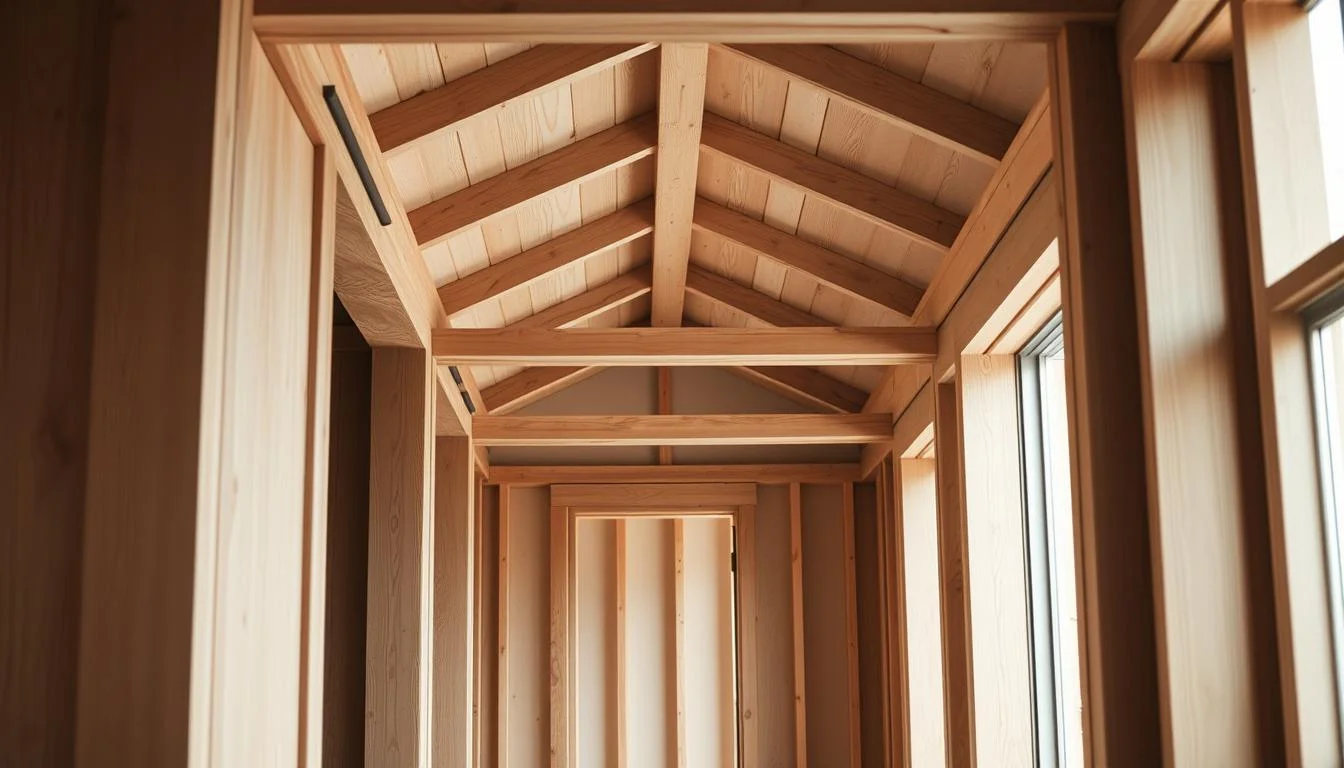
One study found that small-format structural errors can raise repair bills by more than 30%. That scale matters because mistakes concentrate loads and make retrofits costly. This guide opens with clear, actionable framing guidance so the project stays safe and on budget.
Builders must treat connectors, anchors, and fasteners as non-negotiable. Anchors should go every 6 ft on center and within 12 in of ends and joints, and ACQ-treated lumber needs approved fasteners to prevent corrosion. Checking stud crowns keeps walls flat and reduces wavy walls and squeaky floors.
The introduction previews why detailed plans matter: correct joist locations, avoiding joists under toilets, drywall backing, and staggered top-plate joints save time and inspections. For practical examples and more common errors, see a list of framing pitfalls at Family Handyman and a construction-focused roundup at Zero Energy Tiny House.
Key Takeaways
- Prioritize connectors and anchors—follow spacing and placement rules for strength.
- Use ACQ-approved fasteners on treated lumber to avoid corrosion and failure.
- Check stud crowns and stagger joints to prevent wavy walls and weak plates.
- Plan joist runs and utility layouts early to avoid costly rework under fixtures.
- Protect materials from moisture on site to prevent warping and delamination.
- Coordinate with inspectors and use detailed plans as project insurance.
Tiny House Framing Mistakes To Avoid: Setting The Stage For A Safe, Durable Build
When tolerances shrink, disciplined planning keeps the project safe and within weight limits. This section sets expectations for the planning phase and explains why engineered details matter for mobility, inspections, and long‑term performance.
User Intent And What This Guide Covers
Readers want a concise roadmap that turns complex choices into clear steps. The guide outlines how precise O.C. spacing (often 16 in.), verified load paths, and checked connections reduce costly change orders.
It also shows when a DIY approach benefits from professional plan reviews, especially for mobile builds where axle limits and anchorage matter for road safety and code signoff.
How Tiny House Framing Differs From Traditional Homes
Small builds compress tolerances: every inch and pound alters livability and compliance. Stick framing is common for affordability, while SIPs and timber offer higher performance or style.
Early decisions about structure, materials, and connectors set the tone for schedule and inspection success. Clear plans align framing with utilities and reduce surprises during the building process.
| Method | Cost | Weight | Best Use |
|---|---|---|---|
| Stick Framing | Low | Moderate | DIY affordability, easy repairs |
| SIPs | Medium–High | Low | High insulation, tight envelope |
| Timber Frame | High | High | Architectural appeal, long spans |
For a practical build walkthrough, consult the complete DIY guide that pairs plan examples with code tips and trailer considerations.
Lack Of A Detailed Framing Plan: Wasted Time, Money, And Weak Walls
A complete set of drawings turns guesswork into repeatable cuts, faster assemblies, and fewer surprises. Clear plans set exact measurements, O.C. spacing, and member sizes before any lumber is cut. That prevents gaps, poor sheathing fits, and rework.

Why Precise Measurements And O.C. Spacing Matter
Standard 16 in. O.C. spacing affects sheathing and insulation fit. Accurate measurements keep drywall and sheathing from needing shims or custom trimming.
Missing details cause misaligned openings and weak shear walls. In practice, rough sketches have produced roughly 30% overages in lumber and corrective rebuilds, while engineered plans stay on budget.
Weight, Road Travel, And Trailer Constraints In The Planning Process
Plans also document load paths, header sizes, and stud counts so openings stay strong and straight. They let builders size members to the limited footprint and axle ratings without sacrificing strength.
- Integrate cut lists and sequencing to save time and reduce offcuts.
- Map utilities and vent runs to avoid notching that breaks code.
- Have plans peer-reviewed by an engineer for spans and anchorage.
| Plan Element | Benefit | Risk If Missing |
|---|---|---|
| O.C. Layout (16 in.) | Sheathing fits, standard insulation | Gaps, extra cuts |
| Load Path & Header Sizes | Strong openings, straight walls | Sagging doors, wavy drywall |
| Weight Distribution Model | Safe road travel, balanced trailer | Overloaded axles, sway |
Clear plans protect the schedule and money by stopping small problems before they start.
Poor Weight Distribution On Trailers: Imbalance And Road Safety Risks
On trailer builds, where every pound shifts dynamics, the layout of mass governs safety on the road.
Proper planning keeps the center of gravity near axles and prevents sudden sway. Lofts, heavy appliances, and roof dead loads all change how the unit tracks. Designers must map the load path from roof down through the floor and into trailer rails.

Lofts, Appliances, And Load Path Planning
Locate lofts and large appliances close to axle lines so tongue weight stays within safe ranges. Model side‑to‑side balance to stop one wheel pair from carrying excess mass.
“Unbalanced mass on a trailer changes braking behavior and increases the risk of trailer sway.”
- Keep floor joists aligned with planned plumbing chases; avoid cutting joists after installation.
- Map structural routes so concentrated loads transfer into engineered trailer attachment points.
- Account for roof snow and dead load — these affect the center of gravity on long runs.
- Use bolts and brackets specified by an engineer and schedule weigh‑ins during construction.
| Risk | Sign | Mitigation |
|---|---|---|
| Trailer sway | Yaw, poor tracking at speed | Shift mass toward axles; verify tongue weight |
| Tire overload | Uneven wear, heat | Model side balance; redistribute storage and sheathing |
| Unsafe braking | Trailer pushes or jackknifes | Secure engineered brackets; test weigh‑ins |
Outcome-focused planning reduces surprises that appear only when the house hits the road. Early modeling and verified attachment points save time, money, and lives.
Skipping Structural Connectors And Code-Compliant Anchoring
Connectors are the invisible links that keep a building attached to its foundation and intact under load. Leaving them out compromises lateral and uplift resistance during storms, earthquakes, and heavy snow.

Critical Connectors For Wind, Earthquakes, And Heavy Snow
Common hardware includes hold-downs, hurricane ties, and continuous straps that tie roof, wall, and foundation into one load path.
Regional demands raise connector specs and nailing schedules in seismic and high‑snow zones.
Anchor Bolts, Tie-Downs, And Trailer Attachment Points
Anchor bolts belong every 6 ft on center and within 12 in of ends and joints; they must not land in door openings or under jack studs. For trailer builds, use bolted brackets at manufacturer‑specified points to lock the superstructure to the chassis.
Coordinating With Masons And Inspectors Before You Frame
Confirm local code requirements early and record fastener types and sequences in plans for inspections. A preconstruction meeting with masons prevents misplaced anchors and costly rework.
- Omitting connectors increases risk of racking and sliding under load.
- Verify compatibility with treated lumber and corrosive exposures.
- Document anchor layouts so plates, splices, and openings stay clear.
Incorrect Stud Layout And Crowns: Wavy Walls And Drywall Problems
A simple sight test of each piece before layout prevents waviness that costs hours later. Inconsistent crown direction makes a wall behave like a rocking chair and telegraphs into finishes.

Checking Crowns, Keeping Walls Straight, Sturdy, And Plumb
They should mark the crown on every stud and orient crowns the same way, ideally up when assembling flat. This practice produces a flat surface that reduces sanding and patch work.
Engineered lumber is recommended for cabinet runs and tile walls where surface quality matters. Nail plates over joists and trusses at nail points to limit movement and protect utilities.
- Sight each stud, mark the crown, and place consistently during layout.
- Lay out studs at standard O.C. so sheathing edges and drywall align and crack less.
- Include drywall backing at corners and intersections for finish crews and fastener strength.
- Fasten top and bottom plates into underlying members for added stiffness.
- Store lumber dry and flat to prevent twist that shows through wall finishes.
Poor stud layout leads to binding doors, warped trim, and tile failures. Simple checklists and layout lines on the deck let teams audit straightness before sheathing.
Undersized Headers And Weak Openings: Doors And Windows That Sag Or Stick
When loads concentrate at an opening, the framing must be detailed like a junction in a bridge. Undersized headers and missing trimmers cause sagging, cracked finishes, and doors or windows that bind.
Double Jack Studs, Proper Headers, And Backing Around Openings
Jack studs must carry header loads down into the plate and into supporting members. For openings wider than 6 ft, use double jack studs per side unless the plan or engineer specifies otherwise.
- Size headers per plans or an engineer; match header depth to roof and loft loads common in a small house.
- Include king studs and cripple studs so loads transfer cleanly and finishes stay flat.
- Add backing around openings for drywall and trim; this speeds finishing and prevents later disruption.
- Reinforce hinge and latch sides with construction adhesive under plates plus 3-in. toe screws for heavy solid-core doors.
- Avoid placing anchors directly under jack studs near openings; position fasteners so they do not weaken transfer points.
Verify rough openings against manufacturer specs before cutting. Proper layout prevents callbacks for stuck sashes, cracked drywall, and delays from finish carpenters.
Floor Joist Mistakes: Toilet Locations, Squeaks, And Load Paths
Floor framing errors often start at the layout stage and show up later as noisy, weak, or compromised sections under plumbing fixtures.
Coordinate joist runs with plumbing and avoid placing floor joists directly under fixed toilet locations. Cutting or notching load members for drains creates costly repairs and may require engineered patches.
Keep clear chases for large drains and mechanicals. Adjust spacing or add headers around openings when runs conflict with joists. Document the final joist layout on the subfloor so trades do not cut critical members.
- Use adhesives and the correct fastener schedule to stop squeaks between layers.
- Install squash blocks and align studs below lofts and beams for direct load paths.
- Nail wall plates into underlying joists or trusses to reduce movement that telegraphs into finishes.
- Predrill and reinforce with metal plates where penetrations are unavoidable.
| Issue | Sign | Fix |
|---|---|---|
| Joist under drain | Notched member, weak header | Reroute drain or add engineered header |
| Squeaky floors | Noise under foot | Adhesive, proper fasteners, shear panel |
| Point load transfer | Local deflection, tile cracks | Squash blocks, aligned bearing below |
Outcome: Stiffer floors, quieter operation, and preserved structural integrity that keep the house performing and reduce costly field fixes.
Roof And Shear Strategies: Building For Heavy Snow, Wind, And Seismic Forces
Properly tied rafters or trusses and well-nailed panels turn the roof into an active diaphragm. That diaphragm works with designated shear walls to resist racking from wind, travel, and seismic events.
Rafters/Trusses, Sheathing, And Shear Walls
Sheathing adds rigidity and prevents racking when nailed per boundary and field schedules. Builders should mark and install shear walls as specified so lateral loads flow through the system.
Rafters or trusses must be sized and spaced per the plan for expected snow loads and live roof weight. Bracing and connector details stop excessive deflection and keep finishes sound.
Continuous Load Paths From Roof To Foundation Or Trailer
Maintain a continuous load path by aligning members and using specified connectors, anchor bolts, and hurricane ties. This path carries vertical and lateral forces from the roof down into the foundation or trailer chassis.
- Document fasteners—type, spacing, and edge distances—so inspections pass without rework.
- Use uplift protection and boundary nailing schedules to meet regional requirements for snow, wind, and earthquakes.
- Balance material weight for mobile builds and consult a roof load distribution guide for modeling: roof load distribution.
Outcome: A coherent roof and wall system that resists heavy snow and high winds, reduces retrofit risk, and helps prevent common on-site mistakes.
Fasteners, Treated Lumber, And Materials Management
Fastener choice and material staging set the foundation for durable connections and long service life.
ACQ-treated lumber requires ACQ-approved nails and compatible connectors. Standard nails corrode when paired with treated members and can weaken shear walls, plates, and the overall frame.
Using ACQ-Approved Nails And Compatible Connectors
Specify fastener types in the plans and match connector coatings to treated wood. Incompatible metals trigger galvanic corrosion and compromise long-term quality.
Protecting Lumber Quality: Storage, Moisture, And Sheathing Integrity
Elevate pallets, cover stacks with breathable tarps, and allow airflow. Wet stacks delaminate engineered panels and twist members, which creates layout and finish issues later.
- Mandate ACQ-compatible fasteners when treated plates or framing are present.
- Stage materials to reduce handling and protect sheathing edges for airtightness and strength.
- Use adhesives and correct nailing patterns to preserve diaphragm action and reduce squeaks.
- Separate treated and untreated offcuts and fasteners to prevent mix-ups on site.
- Document fastener types and locations in plans for smooth inspections and code compliance.
Outcome: Proactive materials management improves construction quality, extends service life, and cuts callbacks from corroded connections or warped wood.
Overlooking Utilities, Stairs, And Inspections In The Framing Sequence
A clear runbook for plumbing, electrical, and stairs saves time and preserves structural members. Early coordination prevents over‑boring studs and cutting joists after the fact.
Plumbing, Electrical, And Vent Runs Through Studs And Joists
Map penetrations in the plans so trades use coordinated chases sized for pipes and vents. Specify allowable boring and notching and mark those locations on the field set before walls are raised.
Verify anchor and sill locations at the foundation against the plans before framing walls. That reduces last‑minute changes that stall the project and add time.
Stair Riser Measurements And Finished Floor Heights
Stair risers must be uniform; the highest riser cannot exceed the shortest by more than 3/8 in. Account for finished floor thickness (hardwood, carpet, vinyl) before laying out stringers.
Mock up flooring at landings and confirm rise/run before cutting treads. Schedule pre‑cover inspections and photograph concealed work for records and future maintenance.
- Keep a marked field set of plans for the crew and DIY builders to reflect on‑site changes.
- Coordinate sequencing with inspectors and trades to avoid re‑inspections and delays in the project.
- Document foundation interface items—anchors, hold‑downs, and sill details—against the plans before framing starts.
For deeper guidance on inspection sequencing, consult these inspection and supervision tips to keep the build efficient from rough‑in to final.
Conclusion
Clear plans, correct layouts, and verified connectors produce a durable frame and long‑lasting home. Builders who mark crowns, place anchors per spacing rules, and use ACQ‑approved fasteners keep walls flat and connections sound.
Sheathing, shear walls, and continuous load paths protect the structure from wind, heavy snow, and earthquakes. Careful joist and header sizing prevents sagging floors and stuck doors while drywall backing speeds finishing and reduces callbacks.
Pros and DIY builders should document changes, balance loads for road readiness, and store materials dry. A final checklist — plans, components, anchors, studs, joists, headers, and backing — saves money and delivers a safe, code‑compliant home.
FAQ
What’s the biggest framing error that wastes time and money?
The most costly error is starting without a detailed framing plan. Without precise measurements, stud spacing, header sizes, and load paths defined, builders waste material, make incorrect cuts, and create weak walls that require rework. A solid plan matched to the trailer or foundation and the intended layout prevents delays and extra expense.
How does framing on a trailer differ from a conventional foundation?
Framing on a trailer demands strict weight control and balanced load distribution. Builders must account for road travel stresses, trailer attachment points, and lower allowable spans. Joist spacing, header sizing, and placement of heavy items like appliances and lofts must reflect trailer limits rather than conventional foundation assumptions.
What are common mistakes with weight distribution and roof loads?
Common mistakes include concentrating heavy fixtures or lofts off-center, undersizing roof structure for snow loads, and failing to plan continuous load paths. These errors cause trailer sag, handling issues, and structural distress under wind or heavy snow. Early load mapping and proper tie-downs solve these problems.
Which connectors and anchors are essential for a durable build?
Critical connectors include hurricane straps, joist hangers, approved anchor bolts, and trailer-to-frame tie-downs. Using code-compliant hardware designed for seismic, wind, and snow loads and coordinating attachment details with inspectors ensures the structure performs under stress.
How do incorrect stud layout and crown orientation affect walls?
Wrong stud layout or ignoring stud crown direction leads to bowed or wavy walls that cause drywall cracking and paint problems. Always mark and orient stud crowns away from cavities, keep studs plumb, and adhere to on-center spacing specified in the plan to maintain straight, stable walls.
What causes doors and windows to sag or stick after framing?
Undersized headers, missing double jack studs, and inadequate backing create weak openings that deflect under load. Installing properly sized headers, double jack studs, and solid blocking or backing prevents twisting and ensures jambs stay square over time.
What floor joist errors lead to squeaks or structural failure?
Typical missteps are undersized joists, improper spacing, and failure to plan load paths for heavy fixtures like toilets and appliances. Inadequate blocking, missing hangers, or poor attachment to the trailer frame produces deflection, squeaks, and premature fatigue. Use engineered joist sizing and secure connectors to avoid these issues.
How should builders plan roofs for snow, wind, and seismic forces?
Builders should select rafters or trusses sized for local snow and wind loads, install continuous sheathing, and integrate shear walls. Create a continuous load path from roof to trailer or foundation with proper connectors and hold-downs so lateral and vertical forces transfer safely to the base.
What fastener and material mistakes are common and how can they be prevented?
Using incompatible fasteners with treated lumber, wrong nail types for joist hangers, and poor storage that allows moisture damage are frequent errors. Use ACQ-approved nails, corrosion-resistant connectors, and keep lumber dry and flat. Follow manufacturer instructions for fastener type and spacing.
When should plumbing, electrical, and stair planning be done in the framing sequence?
Utilities and stair layouts must be finalized before framing. Mark plumbing and electrical runs, reserve chases, and determine finished floor heights and riser counts to avoid cutting into studs later. Early coordination with inspectors and trade contractors prevents rework and keeps inspections smooth.
How important is coordination with masonry or inspector teams before framing?
Coordination is critical. Inspectors and mason or trailer attachment professionals can identify required anchor locations, fastening schedules, or foundation details that affect framing. Addressing these items ahead of framing avoids costly after-the-fact modifications and failed inspections.
Are there quick checks builders can do on-site to catch framing errors early?
Yes. Confirm on-center spacing with a tape, plumb and level walls as they go, check header and jack stud placement against plans, and verify load-bearing members align from roof to floor. Periodic verification prevents cumulative errors that are costly to fix later.
What role do engineered plans and building codes play in preventing failures?
Engineered plans ensure member sizing and load paths meet local loads and restraint requirements. Compliance with building codes and using prescriptive details for connectors, anchors, and fasteners reduces liability and improves long-term performance. When in doubt, consult a structural engineer or local building department.